Grenada has a little over twenty secondary schools spread across six parishes on the mainland and two islands to the north. That sounds like plenty for a population of around 125,000, but the schools are not spread evenly. The capital and its suburbs hold the oldest and most requested names, while the eastern and northern parishes each depend on a handful of schools that carry a large share of local life. Where a child goes to school decides how early they get up, how much the family spends on bus fares and which friends they keep through their teens.
This guide walks through the country area by area, naming the long-established schools families are most likely to hear about and explaining what each district is like for a secondary student. It does not rank schools, and it is not a complete directory: schools merge, rebuild and change names, and the Ministry of Education publishes the official list with each year's placement notice. Use it to understand the map before you look at individual schools.
St George: the old schools and the busy corridor
The parish of St George, which includes the capital and the fast-growing south, holds the biggest cluster of secondary schools. Several are more than a century old and are woven into national history. The Grenada Boys' Secondary School, known everywhere as GBSS, sits at Tanteen on the edge of St George's and dates from the late nineteenth century. St Joseph's Convent St George's, a Catholic girls' school, is of similar age. Presentation Brothers' College, a Catholic boys' school usually called PBC, and the Anglican High School for girls complete the group of long-established single-sex schools in and around town.
Alongside them are co-educational government and church-assisted schools serving the suburbs and villages, including Happy Hill Secondary to the north of the capital and Boca Secondary in the south. Because so many families live along the corridor between St George's and the airport, these schools draw students from a wide area.
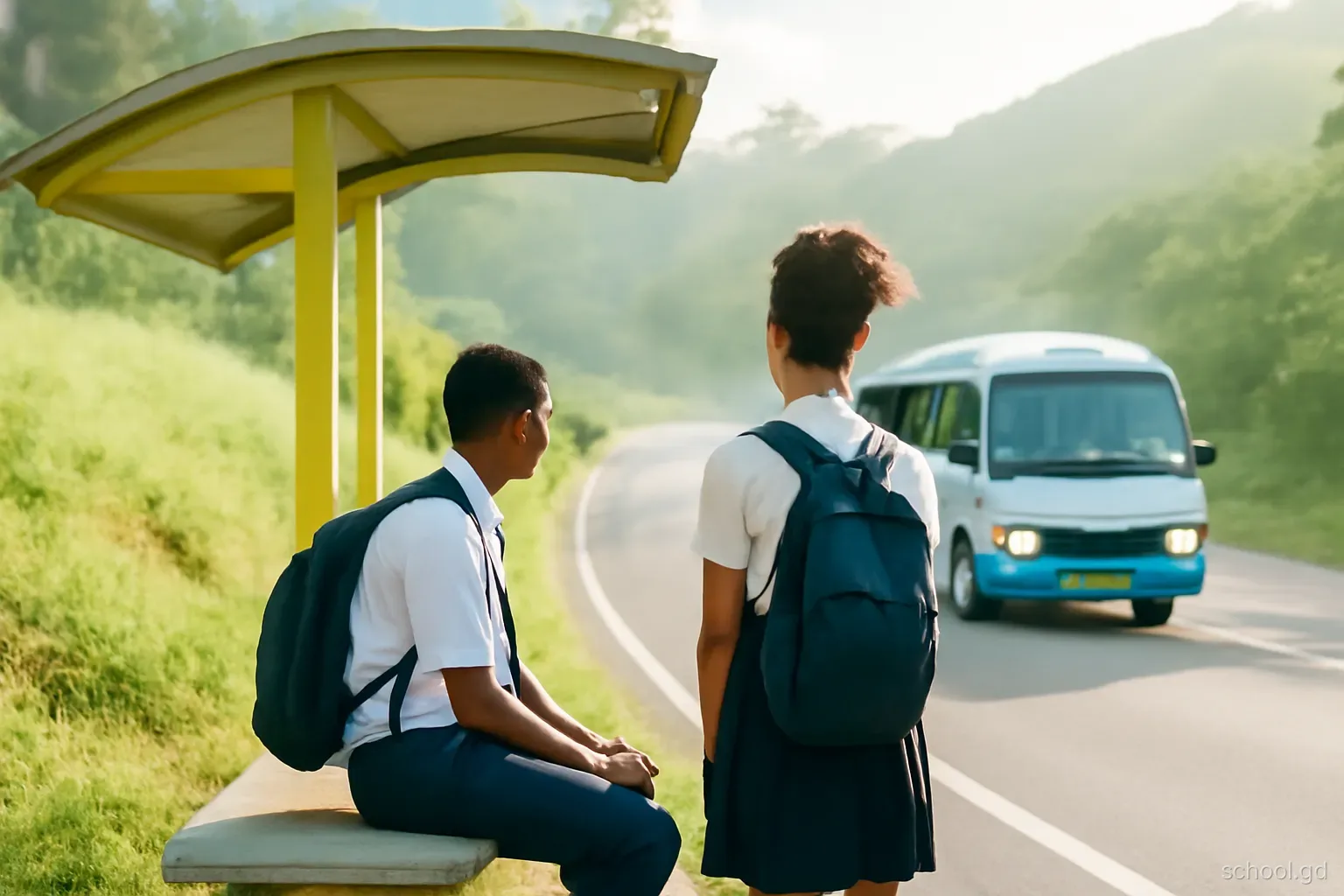
The practical point for parents is traffic. The roads into St George's are congested between about 7am and 8.30am, and a school only a few kilometres away can mean a long ride on a crowded route bus. Visit at school time before deciding that a town school is close enough.
St David and the south-east
St David is a parish of villages, farms and coves on the south-east side of the island, and its secondary students are served mainly by Westerhall Secondary School and St David's Catholic Secondary School. Some St David families also look towards St George's, especially those living in the western villages near the parish boundary, where the drive to town is not much longer than the drive across the parish.
For a family moving into the newer housing developments in St David, the key question is how the child will travel. Bus routes in St David run along the main roads, and children living in hillside villages may have a walk at each end of the journey. Schools here are smaller than the big town schools, which many parents see as an advantage: staff tend to know students and their families, and there is less of the rush that goes with a crowded campus.
The south-east coast also has some of the island's steepest roads. Heavy rain in the wet season, roughly June to December, can slow buses and occasionally block smaller roads, so a realistic plan for wet mornings is part of choosing a school in this area.
St Andrew and Grenville: the east coast hub
St Andrew is the largest parish by area, and Grenville, its main town, is the second busiest centre on the island. That makes it a schooling hub for the whole east coast. Long-established schools here include Grenville Secondary School, St Andrew's Anglican Secondary School and St Joseph's Convent Grenville, and Wesley College, a Methodist school, also serves the parish. Between them they take students from as far as the inland villages around Grand Etang and the coastal communities north and south of Grenville.
Families on the east coast often face the same choice: send a child to school in Grenville, or across the mountain to St George's. The trip over the Grand Etang road or round by the coast takes a long time on a route bus, and few east coast parents choose a town school unless there is a strong reason, such as a family connection, a specific subject or a sports programme.
Grenville's schools are busy, community-centred places with strong local identity. Inter-school sports and church events bring the town together, and many teachers grew up in the same parish they now teach in.
St Patrick, St Mark and St John: the north and west
St Patrick. The northern parish centres on Sauteurs, home of MacDonald College, one of the main secondary schools in the north. Students come in from villages across the parish, some on quite long bus rides along the winding northern roads. Families in the north-east sometimes look at Grenville instead, depending on where they live.
St Mark. Grenada's smallest parish has St Mark's Secondary School in Victoria. It is a small school in a small community, and students from parts of St Mark also travel to schools in St John or St Patrick.
St John. Gouyave and the surrounding villages are served by schools including the J.W. Fletcher Catholic Secondary School at Grand Roy, on the coast road south of Gouyave. The west coast road is the main artery, so travel is straightforward when the road is clear, but it is a single road and a landslide or roadworks can disrupt the whole route.
The trade-off in the north and west. Schools here are generally smaller and closer to home, which reduces daily travel. Some subject choices at upper-school level, particularly specialist technical or science options, can be narrower than at the largest schools. Ask each school directly which subjects it currently offers at CSEC level before assuming they are available.
Carriacou and Petite Martinique
Carriacou has its own secondary schools, Bishop's College and Hillsborough Secondary School, which means most Carriacou teenagers can complete secondary school without leaving the island. Hurricane Beryl struck Carriacou and Petite Martinique very hard in July 2024, damaging homes, schools and public buildings. Classes were disrupted and some school activities had to move while repairs went on, so families moving to Carriacou should check the current state of buildings and arrangements before relying on older information.
Petite Martinique is a very small community, and secondary arrangements for its children have long involved travel or boarding with relatives in Carriacou. The Ministry of Carriacou and Petite Martinique Affairs and the Ministry of Education's district office in Carriacou are the people to ask about current arrangements, including help with transport.
Some Carriacou families choose to send a child to a school on the mainland, usually staying with relatives. It is a big decision for a twelve-year-old, and most families who do it have a strong network of family in St George's or Grenville.
What to check before you settle on an area
If you are moving to Grenada with a child of secondary age, the school and the house decision are really one decision. Before signing a lease or buying, check:
- Real travel time at school hours. Do the journey at 7am on a weekday, not at midday on a Sunday.
- Which bus routes pass the house. A school that is near on a map may involve two buses and a change in town.
- Whether the school has a place. Mid-year entry to popular schools is limited, and the Ministry handles placement for public and assisted schools, not the family alone.
- Subject availability. If your child has a particular interest, such as technical drawing, a modern language or a particular science, confirm the school currently offers it.
- Single-sex or co-educational. Several of the oldest schools are single-sex; most newer schools are co-educational.
- Church affiliation. Many secondary schools are run by Catholic, Anglican, Methodist or other churches with government assistance. They admit students of all backgrounds, but religious life is part of the school day.
- Hurricane and rain resilience. Ask how the school handles closures and whether its buildings serve as shelters, which can delay reopening after a storm.
Frequently asked questions
How many secondary schools are there in Grenada?
There are a little over twenty secondary schools across Grenada, Carriacou and Petite Martinique, a mix of government schools and church-run schools that receive government assistance, plus a small number of private options. The Ministry of Education publishes the official list.
Can a child choose a secondary school outside their parish?
Yes. Families list school preferences during Grade 6, and children are placed across parish lines. In practice, distance, school capacity and the child's results all affect where a child is placed, and many children end up at a school in or near their own parish.
Are Grenada's older secondary schools single-sex?
Several of the long-established schools in St George's are single-sex, including GBSS and PBC for boys and St Joseph's Convent St George's and the Anglican High School for girls. Most other secondary schools around the country are co-educational.
Does Carriacou have its own secondary schools?
Yes. Bishop's College and Hillsborough Secondary School serve Carriacou. Both were affected by the disruption that followed Hurricane Beryl in July 2024, so families should confirm current buildings and arrangements with the school or the Ministry's office in Carriacou.
How long do students spend travelling to school?
It varies widely. A child living near a school may walk ten minutes, while a student commuting into St George's from a rural village can spend an hour or more each way on route buses at peak time. Test the journey at school hours.