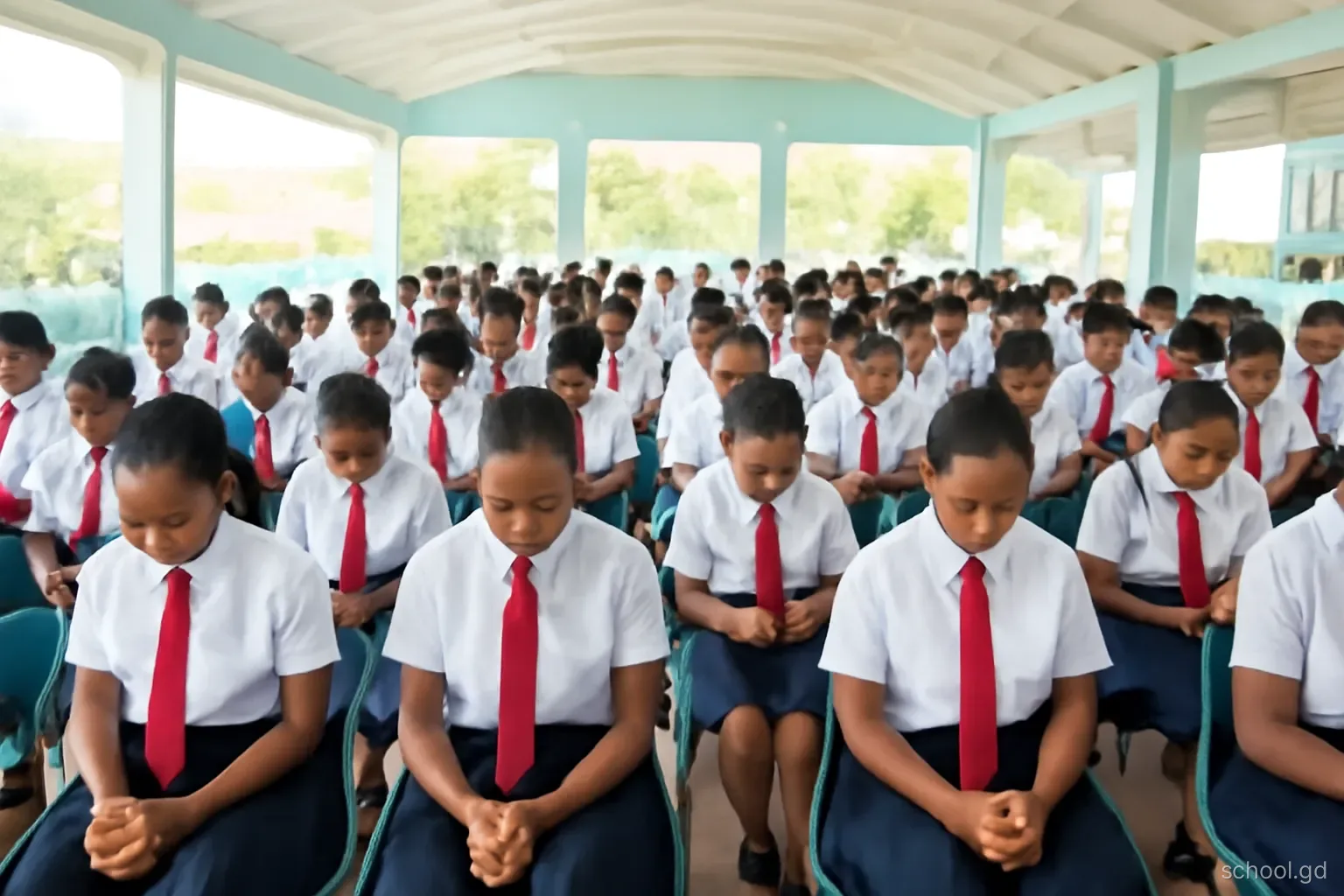
A large share of Grenada's secondary schools were founded by churches. Catholic religious orders, the Anglican Church, the Methodist Church, the Seventh-day Adventists and others built schools long before the state ran a full secondary system, and many of those schools still carry the founding church's name, traditions and influence today. Alongside them are schools established and run directly by the government.
For a family choosing or receiving a placement, the difference can seem confusing. Do church schools charge fees? Do children have to belong to the church? Will a non-religious family feel out of place? This guide explains how the two types of public secondary school work in Grenada, where they differ in practice and where the differences are smaller than people assume. Independent fee-paying schools are a separate category with their own rules.
Why churches run so many of Grenada's schools
The pattern goes back to the nineteenth century, when education across the British Caribbean was provided largely by churches and religious orders. After emancipation, missionary societies and church bodies built schools in towns and villages, and the colonial government gradually began to fund them rather than replace them. The result, repeated in many Caribbean countries, was a partnership in which churches owned schools and the state paid for much of their running.
Secondary education followed a similar path. Catholic religious orders founded convent schools for girls and, later, a brothers' school for boys in St George's, while the Anglican and Methodist churches established their own secondary schools in the capital and in the parishes. The government opened its own secondary schools too, beginning with the boys' secondary school in the late nineteenth century and expanding sharply in later decades as secondary education was extended to every child.
This history explains why so many familiar school names carry a saint, a church or a founder's name, and why alumni of the older church schools often feel a strong attachment to the founding tradition even when the school is now funded largely by the state.
Who runs which school, and who pays
Grenada's public secondary system has two main strands. Government schools are owned and managed by the state through the Ministry of Education. Church-assisted, or denominational, schools are owned by a church, which keeps a role in governance through a board of management and in setting the school's ethos, while the government pays teachers' salaries, provides much of the running funding and sets the national curriculum and standards.
Because of this partnership, church-assisted schools are part of the public system. Students are placed in them through the same national process as government schools, they follow the same curriculum to the same regional examinations, and their teachers are employed and paid through the public service arrangements that cover teachers generally. Principals of church schools are usually appointed with input from the church authority.
For families, the most important consequence is that tuition at both types is free. Both types may ask for contributions, such as a PTA fee, a registration charge or fees for specific activities, and both expect families to pay for uniforms, books and travel. The amounts vary by school, so ask rather than assume.
What actually differs day to day
Religious life. Church-assisted schools generally include prayer at assembly, religious education rooted in the founding tradition and celebrations of the church calendar, sometimes with school masses or services. Government schools usually include non-denominational assemblies and religious or moral education, often with a broadly Christian flavour reflecting the wider society.
Traditions and identity. Many of the oldest church schools have long histories, strong alumni associations and established traditions in music, sport or public speaking. Several government schools are newer and are building their identity, often closely tied to the community around them.
Governance. Church schools answer both to the Ministry and to their board and church authority. In practice, this can mean slightly different processes for raising concerns, and some decisions, such as appointments or the use of buildings, involve the church.
Single-sex schooling. Most of Grenada's single-sex secondary schools are church-founded, including the Catholic convent and brothers' schools in St George's. Government schools are generally co-educational.
Discipline and expectations. Expectations about behaviour, dress and attendance are similar across the system, though some church schools emphasise a particular code of conduct linked to their values.
Do families have to belong to the church?
No. Because placement into public secondary schools is managed nationally, students are not admitted or refused on the basis of religion. A Catholic school will include students from Anglican, Methodist, Pentecostal, Adventist, Muslim, Hindu and non-religious families, and the same is true of schools founded by other churches.
What families should expect is that the school's religious life is part of the normal day. Students attend assemblies that include prayer, take religious education as a subject and may take part in services on important dates. Families from other faiths, or none, usually find schools accommodating, but it helps to raise specific concerns early. For example, families who observe a Saturday Sabbath, or whose children fast at certain times, can discuss arrangements for weekend events and sports with the principal.
Seventh-day Adventist schools have their own pattern, observing the Sabbath from Friday sunset to Saturday sunset, which affects the timing of some activities. Ask any school about its calendar if this matters to your family.
Questions worth asking any secondary school, church or government
The label on the gate matters less than what happens inside. When you visit or meet the principal, these questions reveal more than the school's affiliation:
- How does the school support students who are struggling with reading or mathematics in Form 1?
- What is the approach to bullying, and how quickly are parents informed of problems?
- Which subjects are currently offered at CSEC level, and are any combinations impossible?
- What clubs, sports and cultural activities run regularly, and do they cost anything?
- Is there a guidance counsellor, and how do students reach them?
- How are religious activities handled for students from other faiths?
- What contributions or fees will the family be asked to pay during the year?
- How does the school communicate with parents, and how active is the PTA?
How affiliation fits into placement and transfers
Because placement is national, a family cannot simply apply to a church-assisted secondary school and be accepted on the strength of church membership. The child's listed preferences, assessment results, the number of places at each school and practical factors such as where the family lives all play a part. That applies equally to government schools.
Families who want a transfer between schools, for example after moving house, follow the Ministry's transfer procedure whichever type of school is involved. The receiving school's principal is usually consulted, and church-assisted schools may involve their board, but the process starts with the Ministry and depends on space.
For families arriving from abroad mid-year, the same logic applies. The Ministry of Education guides placement into public schools, and the decision depends on available places in the right form rather than on the family's religion. Families who strongly prefer a school with a particular religious ethos, or who want to avoid one, should say so early, but should also be ready to accept that space is often the deciding factor.
Myths and mistakes
"Church schools are private." Church-assisted schools are part of the public system, with teachers paid by the government and students placed nationally. Independent fee-paying schools are a different category.
"Only church members get in." Placement is not based on religion. Families of every faith, and none, attend church-assisted schools.
"Government schools are second choice." Every school has its strengths. Some government schools offer subjects, programmes or community ties that suit a particular student better than an older, better-known school.
"Affiliation decides the quality of teaching." Teaching quality depends on staff, leadership and resources, which vary from school to school regardless of who owns the building.
Ignoring the practical factors. Families sometimes focus on a school's name or church and overlook travel time, subject choices and the child's own preferences, which often matter more over five years.
Frequently asked questions
Are church schools in Grenada free?
Church-assisted secondary schools are part of the public system, and tuition is free, as at government schools. Families may still be asked for PTA fees or other contributions, and they pay for uniforms, books and travel. Amounts vary, so ask each school directly.
Can a non-Catholic child attend a Catholic secondary school in Grenada?
Yes. Students are placed in public secondary schools through the national process, not by religion. Catholic schools in Grenada include students from many faiths. Children take part in the school's religious life, such as assemblies, and families can raise particular concerns with the principal.
Who employs teachers at church-assisted schools?
Teachers at church-assisted schools are paid by the government and work within public service arrangements, while the church keeps a role in governance and appointments through the school's board. This shared model is why these schools are described as assisted.
Do church schools follow a different curriculum?
No. Church-assisted and government schools follow the national curriculum and prepare students for the same Caribbean examinations. Church schools add religious education and activities rooted in their tradition, which form part of the school day alongside the standard subjects.
Can families choose a church school in the placement process?
Families list preferred schools during Grade 6, and those can include church-assisted schools. Final placement depends on results, preferences, school capacity and practical factors such as distance, so a preferred school is not guaranteed.