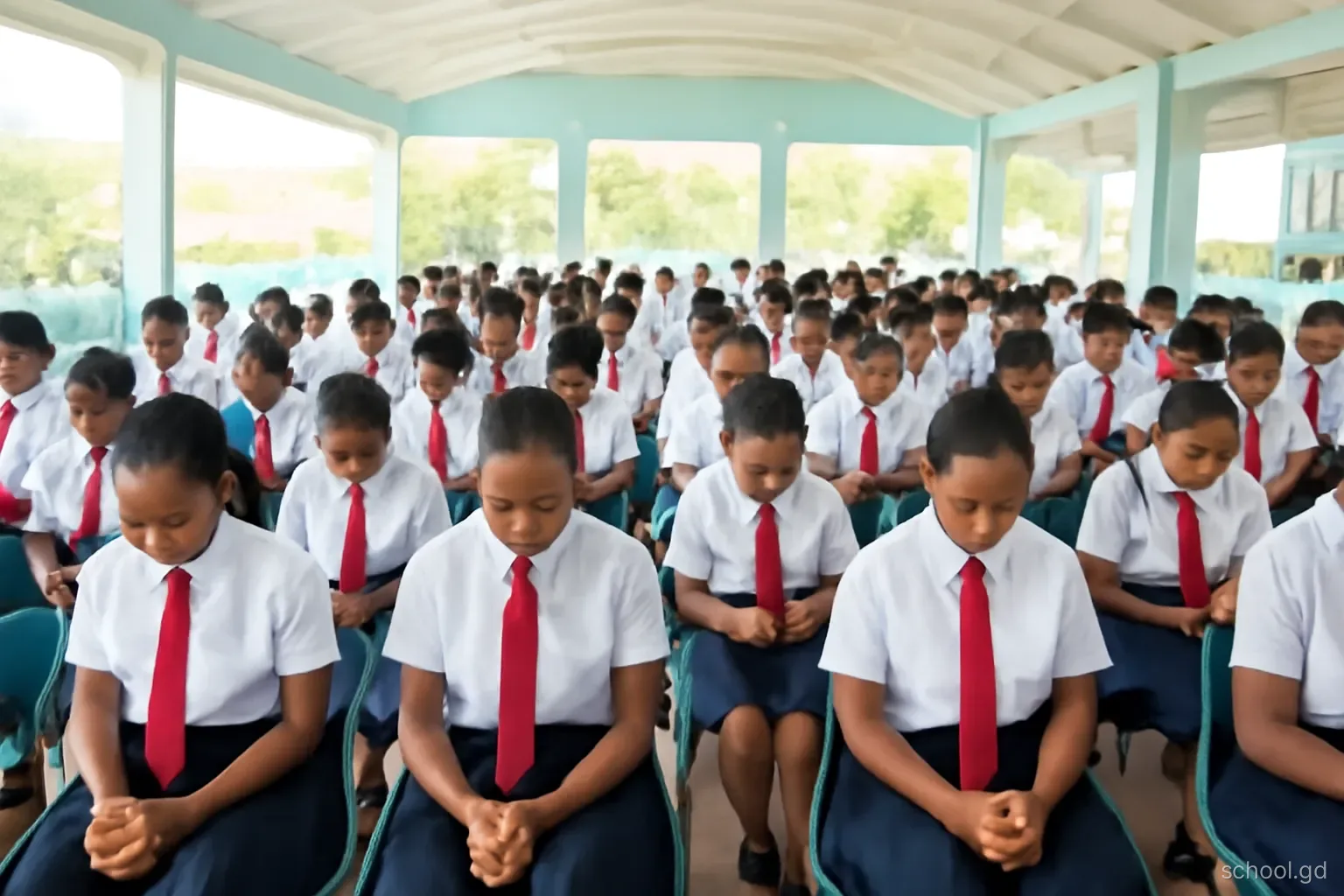
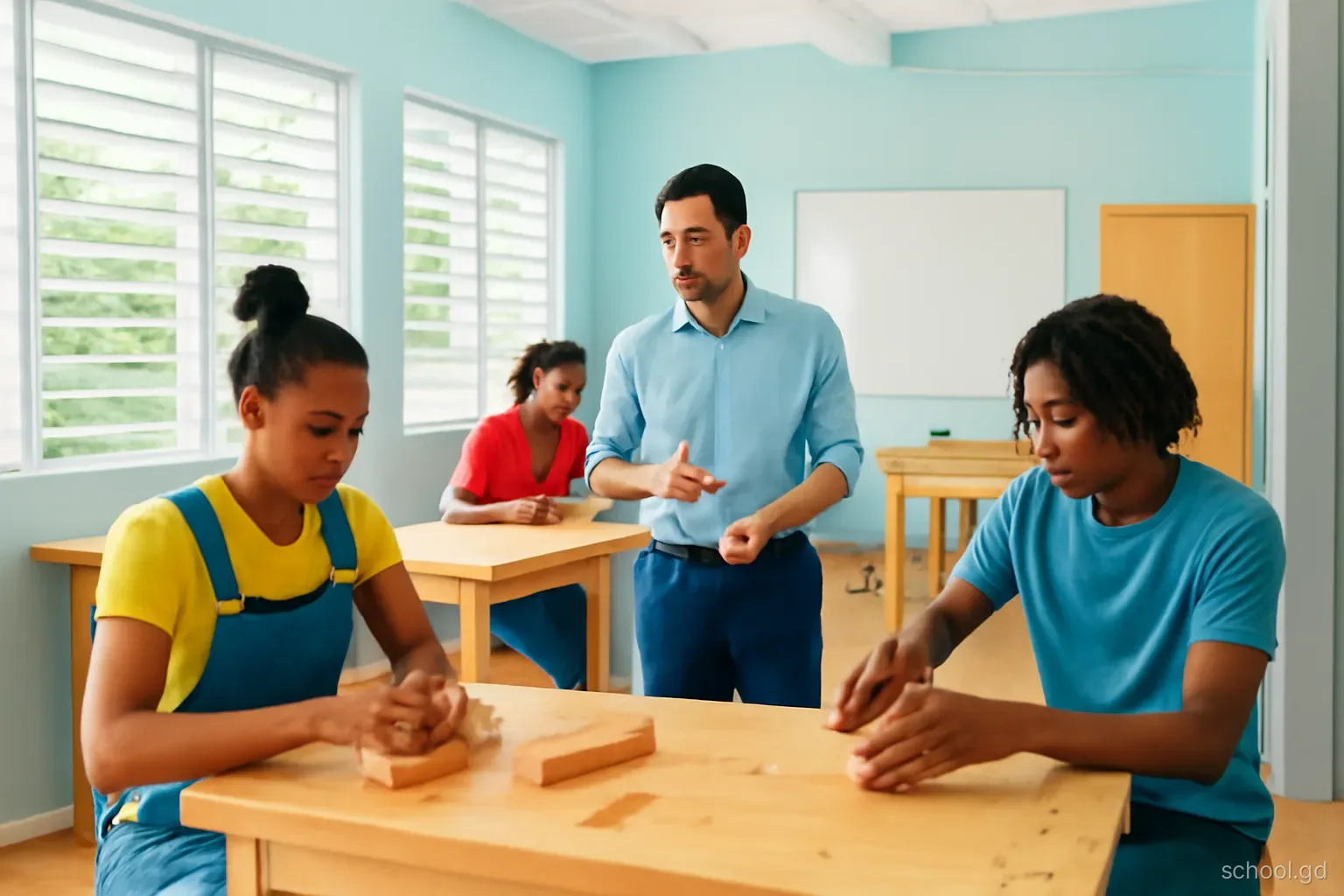
Secondary school in Grenada runs for five years, from Form 1 at around age eleven or twelve to Form 5 at around sixteen. Those five years divide naturally into two parts. The lower school, Forms 1 to 3, gives every student a broad base across the main subjects. The upper school, Forms 4 and 5, narrows the timetable to the subjects each student will take in the Caribbean Secondary Education Certificate examinations at the end of Form 5.
The hinge between the two is the choice of options, which most schools make towards the end of Form 3. It is one of the most consequential decisions in a young person's education, and it often happens with less family involvement than it deserves. This guide explains what each stage looks like, how options and streams usually work, and how parents can help without taking over. Details differ between schools, so ask your child's school for its own subject structure.
Forms 1 to 3: the broad lower-school curriculum
In the lower school, all students follow a broad curriculum set within the national framework. English and mathematics are at the centre, alongside integrated science, social studies, a modern language (most often Spanish, sometimes French), information technology, physical education and religious or moral education, particularly in church-assisted schools. Many schools also include visual arts, music, home economics or food and nutrition, and technical or agricultural subjects.
The lower school is meant to give students a taste of a wide range of subjects before they specialise. That makes it a useful period for watching where your child's interests and strengths lie. A student who comes alive in the workshop, the science laboratory or the art room is giving you information that matters at option time.
Assessment in the lower school is mostly internal: class tests, assignments and end-of-term examinations, reported on report cards each term. The marks are a guide to progress rather than a final verdict, but persistent difficulty in reading or mathematics should be raised with the school early, because both underpin every upper-school subject.
Streams and form groups
Some Grenadian secondary schools group students into forms by general attainment, at entry or after Form 1, while others keep mixed-ability forms and set students only in particular subjects. Practice varies and has changed over the years, so ask how your school organises classes rather than assuming.
Where streaming exists, it usually affects the pace and depth of teaching rather than shutting doors. Students can move between groups, and many schools review placements at the end of each year. Parents who are worried about their child's group should ask what it means for subject choices later and what the student would need to do to move.
In practice, the bigger differences come from the timetable in Forms 4 and 5. A school may offer more sciences in one option block and more business or technical subjects in another, and the block a student lands in shapes which CSEC subjects they can combine. That is why the Form 3 options process deserves careful attention.
How the Form 3 options process usually works
Schools run options in their own way, but the sequence tends to look like this:
- Early in the year, the school explains which subjects are compulsory in Forms 4 and 5, typically English, mathematics and often a science or social studies subject.
- Students receive a list of optional subjects arranged into blocks, with one subject chosen from each block. Blocks reflect timetabling and staffing, which is why some combinations are impossible.
- Teachers and guidance counsellors talk to students about their strengths and interests, sometimes using Form 3 results to advise on whether a subject is realistic.
- Students take the form home and discuss it with parents. This is the moment for a proper conversation, not a signature in the morning rush.
- The school confirms allocations, sometimes after balancing class sizes. A student may not get every first choice, so a sensible second choice in each block matters.
- Changes in the first weeks of Form 4 are sometimes possible but get harder as the course work begins.
How to help your child choose options well
Start from interests and strengths, not prestige. A student doing well and enjoying a subject usually learns more and achieves more than one forced into a subject seen as "better". Interest sustains two years of work.
Keep doors open. If your child is unsure about future careers, a balanced mix of a science, a humanities or business subject and a practical or creative subject keeps options open for further study.
Check entry requirements for likely next steps. If medicine, engineering or nursing are realistic interests, ask the guidance counsellor which CSEC subjects T.A. Marryshow Community College and universities usually expect, and plan accordingly.
Take practical subjects seriously. Technical drawing, electrical and electronic technology, agricultural science, food and nutrition, clothing and textiles and similar subjects lead to real careers and to further training. They are not consolation subjects.
Watch the total load. More subjects is not always better. A manageable number taken seriously often serves a student better than a long list with weak results.
Listen to teachers. Teachers see a student's work daily. If a teacher has concerns about a choice, ask why before overruling it.
Forms 4 and 5: the CSEC years
Once options are fixed, Forms 4 and 5 are organised around the CSEC syllabus for each subject. A significant feature of CSEC is the School-Based Assessment, coursework completed and marked in school and moderated by the Caribbean Examinations Council, which counts towards the final grade in most subjects. Students who fall behind on SBAs in Form 5 can create serious pressure for themselves at the end of the course.
Many schools also offer Caribbean Vocational Qualifications or other technical and vocational programmes alongside or instead of some CSEC subjects, linked to the wider push for technical and vocational education and training. These lead to recognised certificates in areas such as hospitality, construction, agriculture and information technology.
Schools generally enter students for CSEC through the school, and many schools now ask students to sit internal mock examinations in Form 5. For the details of CSEC, registration and results, families should look at material specifically about the examinations; at school level, the main jobs for parents are to keep track of coursework deadlines, protect study time and keep communication open with teachers.
Homework, textbooks and learning at home
Homework rises noticeably from Form 1 onwards, and by Forms 4 and 5 students are juggling assignments in several subjects alongside School-Based Assessment coursework. A fixed daily routine, a quiet corner and a simple planner help more than any amount of weekend cramming. Parents do not need to understand every subject to help; asking a student to explain what they learned that day is itself useful revision.
Textbooks are listed by each school and some are used for several years, so second-hand copies from older students are common. Before buying, check the edition the teacher expects, as syllabus changes can make older books less useful. Schools and PTAs sometimes run book exchanges or rental schemes, and government support for books has been available in some years.
Internet access matters more than it once did, as teachers increasingly set research tasks and share material online. Where home connections are limited, public libraries, community centres and school computer rooms can fill the gap; ask what the school provides. Extra lessons, offered privately by teachers and tutors, are common in the CSEC years, but they work best for specific gaps rather than as a substitute for steady effort in class.
Parents can also help by keeping an eye on the balance between screens and study, and by noticing when a student seems to be avoiding one subject. A quiet word with the subject teacher early in the term usually solves more than a crisis conversation before the examinations.
Frequently asked questions
How many years is secondary school in Grenada?
Secondary school normally lasts five years, from Form 1 to Form 5, starting around age eleven or twelve. Students who continue afterwards usually move to T.A. Marryshow Community College for CAPE or other programmes rather than staying in a school sixth form.
When do Grenadian students choose their CSEC subjects?
Most schools run the options process towards the end of Form 3, with students starting their chosen CSEC subjects in Form 4. The exact timing and the subjects offered differ between schools, so ask for your school's timeline early in Form 3.
Are students streamed in Grenada's secondary schools?
Some schools group students by attainment, while others use mixed-ability forms with setting in certain subjects. Arrangements vary by school and have changed over time. Ask your school how its forms are organised and how students can move between groups.
Can my child change options after starting Form 4?
Sometimes, if there is space and the change is made early. As coursework and School-Based Assessments progress, switching becomes harder. Talk to the form teacher or guidance counsellor as soon as a problem appears rather than waiting until Form 5.
Do secondary schools offer vocational subjects?
Many do. Alongside academic subjects, schools commonly offer technical and practical subjects, and some provide Caribbean Vocational Qualifications. The range varies with each school's staff and facilities, so check what is currently offered before choosing a school for that reason.