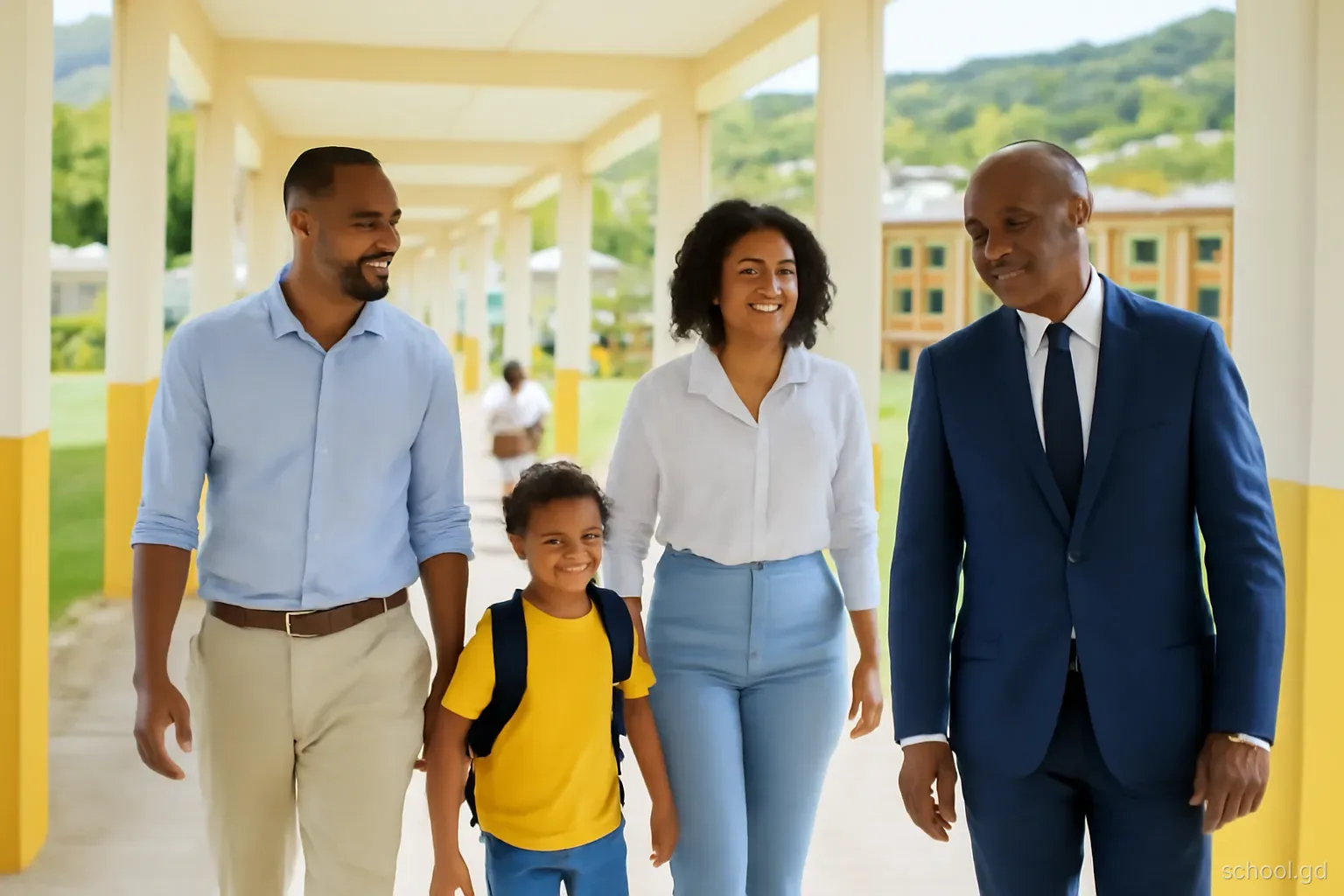
Grenada's private schools are small. Some have only a few dozen pupils, and even the larger ones are modest compared with international schools in bigger countries. That has real advantages: small classes, staff who know every child and a family atmosphere. It also means that a great deal depends on a few people. One excellent teacher can make a year, and one departure can change it. A careful visit is the best way to see what a school is really like today rather than what its reputation or website suggests.
This checklist gathers the questions that matter most, grouped by theme, with notes on why each one counts in the Grenadian context. Nobody needs to ask all thirty in one meeting. Pick the ones that matter for your child, send some in advance by email and use the visit itself to watch and listen. Arrange visits during a normal teaching day if possible, not on a holiday or open day when the school is on display.
People: teachers, leadership and turnover
In a small school, people are the product. These questions get at the stability and quality of the staff:
- 1. Who leads the school day to day, and how long have they been in post?
- 2. How many teachers are there, and which year groups does each teach?
- 3. What qualifications and teacher training do staff hold, and where did they train?
- 4. How many teachers left in the past two years, and why?
- 5. Are any classes taught by staff covering subjects outside their training?
- 6. How are new teachers recruited, and are any on short contracts or visas that may end mid-year?
- 7. Who covers when a teacher is ill or away?
- Turnover matters more in Grenada than in a large city school, because a small staff means one departure can affect a whole stage. A school that answers these questions openly is usually a school confident in its team.
Curriculum, classes and progress
These questions test whether the curriculum on paper matches what children actually experience:
- 8. Which curriculum does each year group follow, and how far does it run: to the end of primary, lower secondary, IGCSE, CSEC or beyond?
- 9. How large are classes, and are any year groups combined?
- 10. How is progress assessed and reported to parents, and how often?
- 11. Is the school a registered centre for external examinations, or where do students sit them?
- 12. What happens to students when they finish the school's highest year?
- 13. How does the school support children who arrive from a different system or speak another first language?
- 14. Which subjects are taught by specialists, such as languages, music, sport or science?
- Combined or mixed-age classes are common in small schools and can work well, but they demand skilled teaching. Ask how the teacher plans for different ages and levels in the same room.
Wellbeing, inclusion and behaviour
A small school can be warm and supportive, or it can leave a child with no escape from a difficult friendship group. These questions help you tell the difference:
- 15. How does the school identify and support learning difficulties, and does it have access to specialists?
- 16. What is the policy on bullying, and how are parents told about incidents?
- 17. How many children are in your child's year group, and what is the balance of boys and girls?
- 18. How does the school help new pupils settle and make friends, especially mid-year?
- 19. What is the approach to discipline and behaviour?
- 20. How are children supervised at break, lunch and arrival and departure times?
- For a child arriving from abroad, the size of the peer group deserves special attention. A year group of six can be wonderful or isolating, depending on the mix.
Safety, buildings and the climate
Grenada's climate and geography raise questions that families from colder countries may not think to ask:
- 21. What is the hurricane and emergency plan, and how does the school communicate closures?
- 22. Are buildings designed or reinforced for storms, and when were they last inspected?
- 23. Is there shade and water for outdoor play during the hottest hours?
- 24. How does the school manage heavy rain, flooding of access roads and power cuts?
- 25. Who is trained in first aid, and what is the plan for a medical emergency?
- 26. How are visitors to the school controlled, and who may collect a child?
- Hurricane season runs from June to November. Grenada sits towards the southern edge of the main hurricane belt but was hit by Hurricane Ivan in 2004 and Hurricane Beryl struck Carriacou and Petite Martinique in 2024. A school with a clear, practised plan is a school that has taken this seriously.
Money and the contract
Fees in Grenada's private schools vary widely, and what they include varies too. Before committing, ask:
- 27. What is the full annual cost, including registration, tuition, books, uniforms, examination fees, trips and any building or technology levies?
- 28. When are fees due, in what currency and by what payment methods?
- 29. What is the refund policy if the family leaves mid-year, for example at the end of a posting?
- 30. Are there discounts for siblings, bursaries or payment plans?
- Get the answers in writing, read the enrolment contract or handbook before signing and keep copies. Ask also how often fees have risen in recent years, since that helps you budget for the whole time your child is likely to attend.
After the visit: comparing schools fairly
Write down your impressions on the same day, while details are fresh. It helps to use the same headings for every school, for example teaching, atmosphere, safety, curriculum pathway, cost and practicalities, so that a confident principal or an attractive campus does not outweigh more important factors.
Then check what you were told. Confirm registration and examination arrangements with the relevant bodies, read the handbook and contract, and speak with at least one parent you found independently. Families in Grenada often rely heavily on word of mouth, which is useful but tends to reflect one family's experience with one teacher in one year.
Finally, think about the whole family's life, not just the school. A school forty minutes away through St George's traffic may be excellent but exhausting for a child and a parent doing the drive twice a day. Consider where you will live, how your child will get home on days when you cannot collect them and what happens during the long summer holiday from July to early September, when working parents need other arrangements.
If two schools still seem evenly matched after all this, ask whether your child can spend a trial morning at each. Many small private schools in Grenada are willing to arrange this, and the child's own experience of the classroom, the other children and the teacher often settles the decision more clearly than any list of questions.
What to watch for on the tour
The children. Do pupils seem engaged and relaxed? Do they speak easily with adults? Children's behaviour when they are not performing for visitors says a great deal.
Displays and work. Look at exercise books and work on the walls. Is it varied, recent and clearly the children's own?
The library and resources. A small but well-used collection of books and equipment is a better sign than an impressive but unused room.
How staff talk about other schools. Confident schools describe their own strengths without running down others.
Answers to hard questions. Notice whether difficult questions about turnover, fees or weaknesses get direct answers or vague reassurance.
Your child's reaction. If your child is old enough, ask what they noticed. Children often pick up on atmosphere that adults miss.
Frequently asked questions
How big are private schools in Grenada?
Most are small, from a few dozen pupils to a few hundred, with small classes and sometimes combined year groups. That can mean close attention for each child, but also a small peer group and heavy reliance on a few key teachers. Ask for current numbers by year group.
Should families visit a Grenadian school before moving?
If you can, yes. A visit during a normal teaching day shows more than any brochure. If travel is not possible, ask for a video call with the principal, a recorded tour and contact with a current parent who can describe daily life honestly.
Can private schools in Grenada take children mid-year?
Many accept mid-year pupils if a place is available, which is common for families arriving on postings or for St George's University. Places in some year groups are limited, so contact schools as early as possible and ask how they help newcomers settle.
What should be in a private school's enrolment contract?
Look for the full fee schedule, payment dates, currency, what happens if fees are late, notice and refund terms if you leave, policies on behaviour and exclusion, and any obligations on parents. Ask for anything verbal to be confirmed in writing.
Do Grenadian private schools have hurricane plans?
Responsible schools do, covering closures, communication with parents and the safety of buildings. Ask to see the plan, how closures are announced, and whether the building is used as a shelter, since that can affect how quickly classes resume after a storm.