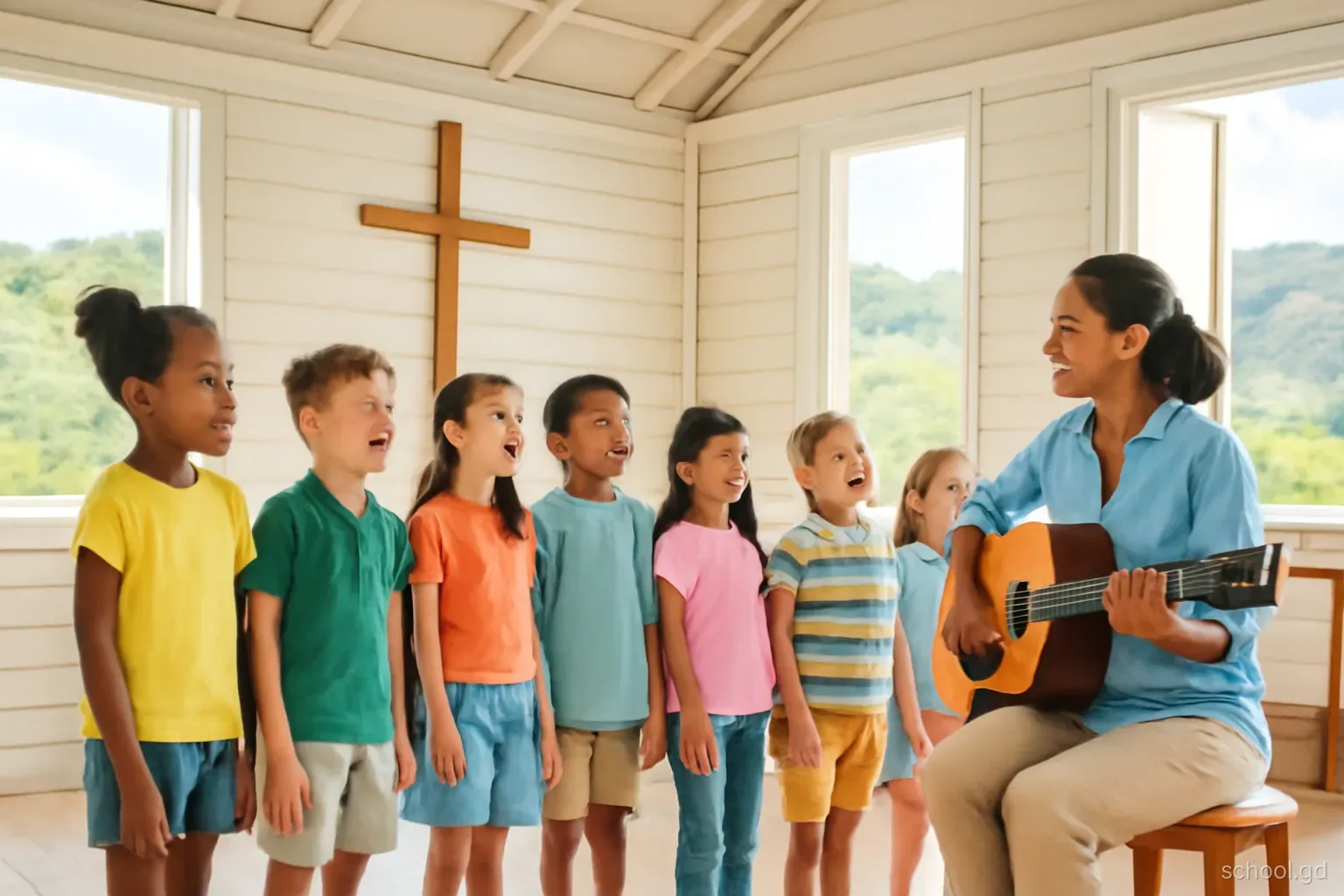
Faith runs through Grenadian education. Many of the country's public schools were founded by churches and still carry their names and traditions. Alongside those church-assisted public schools is a smaller group of independent Christian schools, often linked to evangelical, Pentecostal, Baptist or other congregations, which charge fees and operate without the government paying their teachers. They exist at primary level in particular, and some carry pupils into the secondary years.
For families, the distinction matters. An independent Christian school is not part of the public placement system, sets its own admissions and fees and may follow the national curriculum, an overseas Christian curriculum or a mix of the two. This guide explains how these schools work, what tends to distinguish them, and what parents should check before enrolling, whatever their own faith. Individual schools differ considerably, so always confirm details directly.
Independent versus church-assisted: the key difference
Church-assisted schools are public schools: the church owns the school and shapes its ethos, while the government pays teachers and students are placed through the national system. Tuition is free. Independent Christian schools are private: they are usually founded and run by a church, a ministry or a group of Christian families, they employ their own teachers, they set their own admissions criteria and they charge fees.
Like all private schools, independent Christian schools must be registered with the Ministry of Education under the Education Act. Registration brings expectations about premises, staffing and safety, but the school otherwise has more freedom than a public school in curriculum, timetable and admissions.
That freedom is why families choose them, and why they vary so much. One independent Christian school may look much like a small public school with daily devotions added; another may follow a distinct overseas Christian curriculum with individual workbooks and a very different structure to the day.
What tends to distinguish these schools
Faith integrated across the day. Devotions, prayer, Bible study and Christian perspectives in subjects such as science and history are typically woven through the curriculum rather than confined to a religious education lesson.
Small size. Most are small, with modest class sizes and sometimes combined year groups.
Community links. Schools are often closely connected with a congregation, and families may know each other through church as well as school.
Expectations of families. Some schools ask parents to sign a statement of faith or agree to a code of conduct; others welcome families of any background who accept the school's ethos.
Discipline and values. Clear behaviour codes rooted in the school's faith are common, and parents should read them carefully.
Curriculum choice. Some follow the national curriculum to CPEA and CSEC; others use overseas Christian programmes, which affects how pupils move on.
Curriculum: national, overseas or both
The curriculum an independent Christian school uses shapes your child's future options more than any other factor. Schools following the national curriculum prepare pupils for the Caribbean Primary Exit Assessment and, at secondary level, for CSEC examinations, keeping pupils aligned with the public system and with T.A. Marryshow Community College and regional universities.
Other schools use overseas Christian curricula, some of them American in origin, which can be built around individual workbooks or structured units with their own testing. These can suit some children well, but families should understand how the programme leads to recognised qualifications. Ask what certificate or diploma pupils receive at the end, whether it is accredited and how former pupils have used it to enter college, university or employment in Grenada and abroad.
Some schools mix the two, using an overseas programme in the early years and switching to the national curriculum later, or adding CSEC subjects to an overseas diploma. Clarity on this point is essential before enrolling.
Questions to ask an independent Christian school
Beyond the usual questions about fees, staff and safety, these focus on what is particular to faith-based independent schools:
- Which church or organisation founded the school, and who governs it now?
- Does the school require families to share its faith or sign a statement of belief?
- How is faith taught, and how are children from other Christian traditions or other faiths treated?
- Which curriculum is followed at each stage, and what qualification does it lead to?
- Are pupils entered for CPEA and CSEC, and if so how many subjects are offered?
- Where were teachers trained, and do they hold recognised teaching qualifications?
- How are science topics, such as the origins of life, taught?
- What is the approach to discipline, and is it written down?
- How does the school support children with learning difficulties?
- What do pupils typically do after leaving the school?
Costs and practical considerations
Fees at independent Christian schools are often lower than at schools offering international curricula, because many are supported by a congregation and keep overheads modest. Even so, costs vary widely, and families should ask for a full schedule including registration, books, uniforms and examination fees. Some schools offer reduced fees for members of the founding church or for families in difficulty.
Buildings and facilities can be simple. Some schools share premises with a church, using halls and rooms that serve other purposes on Sundays. That is not necessarily a disadvantage, but ask about science facilities, outdoor play space, library resources and the school's plan for hurricanes and other emergencies.
Location matters too. Independent Christian schools are spread across the island, and some draw families from a wide area. Check the daily journey, especially in the rainy season, and whether any transport is organised.
It is also worth asking how the school links with the wider education system. Some independent Christian schools take part in national events, inter-school sports and teacher training alongside public schools, while others operate more separately. Links of this kind widen a child's circle and make a later move into the public system or TAMCC easier.
Families from other faiths, or none
Some families choose an independent Christian school for its small classes, values or location without sharing the school's particular faith. That can work well, provided everyone understands the arrangement from the start. Children will usually take part in devotions, Bible lessons and religious celebrations as a normal part of the day, and opting out may not be possible in a school where faith runs through every subject.
Families from other Christian traditions should also look closely. A school founded by one denomination may teach doctrine or practices that differ from what a child hears at home, particularly on matters such as baptism, worship styles or the observance of particular days.
The best approach is an honest conversation with the principal before enrolling. Explain your family's background and ask how the school would handle it. Many schools are welcoming and clear; if the answers leave you uneasy, it is better to know before your child is settled than to discover a conflict halfway through the year.
Pitfalls and things to weigh
Unclear qualifications. The biggest risk is a curriculum that does not lead clearly to recognised qualifications. Ask before enrolling, not when your child is fifteen.
Very small secondary classes. A secondary class of four or five can limit subject choice, laboratory work and friendships. Ask how many pupils are in the upper years.
Mismatch with family beliefs. Even within Christianity, schools differ on doctrine and practice. Read the statement of faith and behaviour policies carefully.
Leadership dependence. Small schools often depend on a founder or pastor. Ask how the school is governed and what plans exist for continuity.
Switching later. Moving from an overseas Christian curriculum into the public system can involve gaps. Plan transitions at natural break points such as Form 1.
Frequently asked questions
What is the difference between a church school and an independent Christian school in Grenada?
Church-assisted schools are public schools owned by a church, with teachers paid by the government and students placed nationally, so tuition is free. Independent Christian schools are private, employ their own staff, set their own admissions and charge fees.
Do independent Christian schools in Grenada prepare pupils for CSEC?
Some do, following the national curriculum to CPEA and CSEC. Others use overseas Christian curricula leading to different qualifications. Ask each school exactly which examinations pupils sit and how former pupils have moved on to further study or work.
Do families have to be Christian to enrol?
Policies vary. Some independent Christian schools welcome any family willing to accept the school's ethos and religious activities, while others ask parents to share the faith or sign a statement of belief. Ask the school directly before applying.
Are independent Christian schools cheaper than other private schools?
They are often less expensive than schools offering international curricula, partly because many are supported by a congregation, but fees vary widely. Ask for a full written schedule, including registration, books, uniforms and examination costs, before comparing.
Do independent Christian schools need to be registered?
Yes. Like all private schools in Grenada, they must be registered with the Ministry of Education under the Education Act. Ask the school for confirmation of its registration and check with the Ministry if you have any doubt.