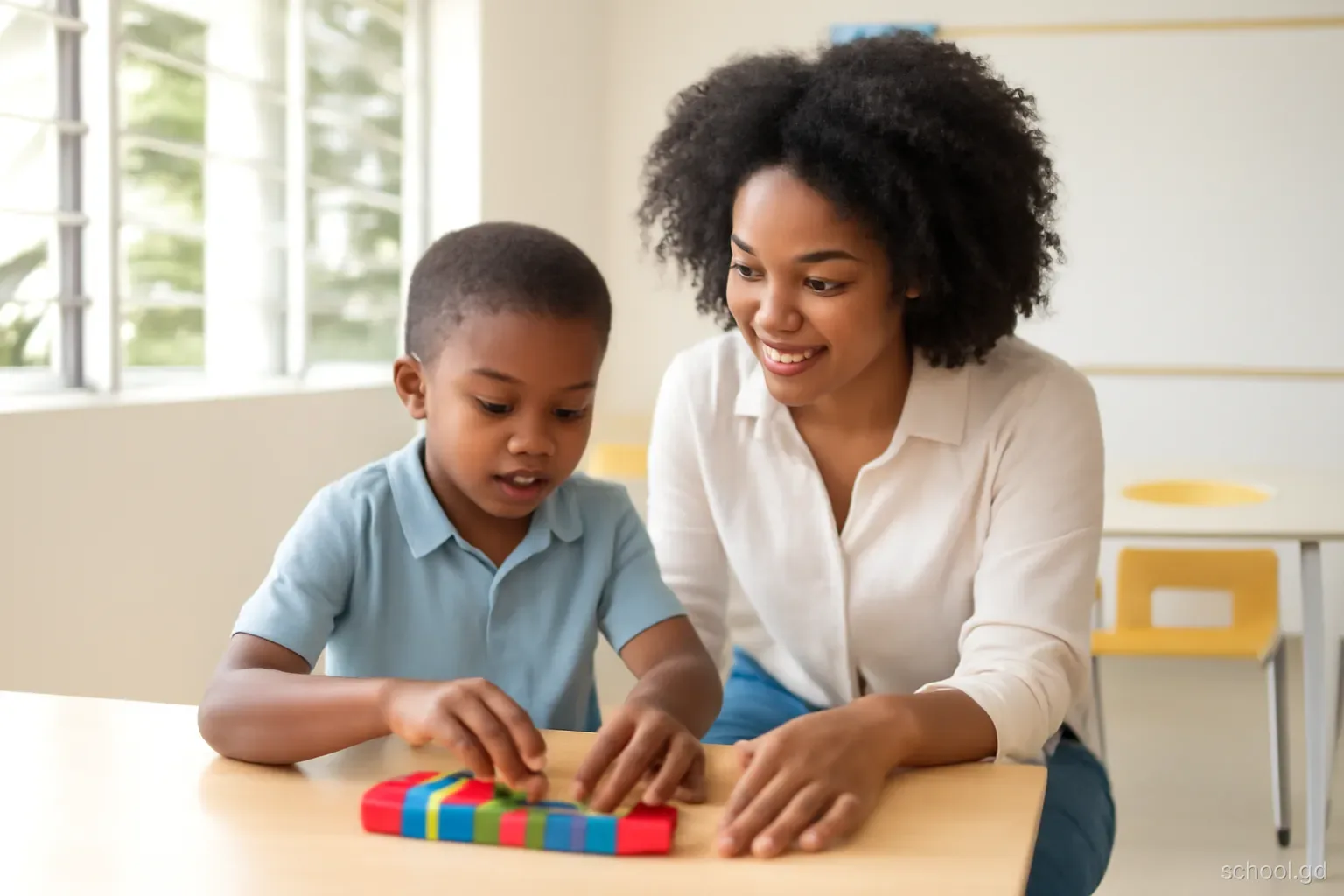
For a family with a child who learns differently, the first questions about Grenada are rarely about beaches. Is there an assessment service? Will a mainstream school accept a child with autism, ADHD, dyslexia, hearing loss or a physical disability? What support will there be in the classroom, and what happens at exam time? The honest answer is that provision exists, it has grown over the past two decades, and it is still thin compared with what families from larger countries may be used to.
This guide outlines how special education works in Grenada's public system, what kinds of schools and services exist, how exam accommodations operate, and what to check before choosing a school. It is written for parents who want a realistic picture, not reassurance, and it encourages contacting the Ministry of Education early because waiting times and places are both limited.
Throughout, the emphasis is on what a parent can do: the documents worth bringing, the order in which to approach people, and the realistic gaps that families commonly fill with private therapy, parent networks and close, regular contact with the class teacher.
How provision is organised
Special education in Grenada sits under the Ministry of Education, which has a unit responsible for special needs, along with school psychology and guidance services. The overall policy direction, in line with commitments across the OECS and international conventions on the rights of children and persons with disabilities, is towards inclusive education: educating children with additional needs in mainstream schools wherever possible, with support, and reserving separate special schools for children whose needs cannot be met in a mainstream setting.
In practice, the system combines three elements. There are a small number of special schools and centres for children with more significant disabilities, mostly in and around St George's, with limited provision elsewhere. There are mainstream schools, where most children with milder learning difficulties are educated, sometimes with help from specially trained teachers or resource rooms. And there are non-governmental organisations and parent groups that fill gaps with therapy, advocacy and awareness work.
Carriacou and Petite Martinique have far fewer specialised resources, and families there often need to travel to the mainland for assessments or therapy.
Teacher training has gradually added special education content, and some Grenadian teachers have taken specialist qualifications through regional universities or overseas study. Even so, the number of specialists remains small relative to need, and families should not assume that a particular named service or programme seen in an older report is still running in the same form. Asking the Ministry what is available this year is the reliable approach.
Getting an assessment
A formal assessment is usually the gateway to specialised support or a special school place. The route in the public system typically runs like this:
- Raise concerns with the class teacher and principal, and ask the school to document what it is seeing. Teachers' observations and work samples carry weight later.
- Ask the principal to refer the child to the Ministry's special education or school psychology services. Referrals generally come through the school rather than directly from parents.
- Expect a waiting period. The number of educational psychologists and specialists in the public service is small, so waits of several months are possible.
- In parallel, consider a medical assessment through a paediatrician, either at the General Hospital in St George's or privately, especially for conditions such as autism, ADHD or hearing and vision problems.
- When an assessment is completed, ask for a written report and a meeting to discuss recommendations, placement options and classroom strategies.
- Share the report with the school and agree what support will actually be provided, who is responsible for it and when it will be reviewed.
What support in a mainstream school can look like
Classroom adjustments. Seating near the teacher, extra time for written work, simplified instructions, visual timetables and breaks are low-cost adjustments many Grenadian teachers will make once they understand a child's needs.
Resource teachers and units. Some schools have teachers with special education training or a resource room where children work in small groups for part of the day. Availability varies from school to school and year to year as staff move.
Shadow teachers or aides. Some families pay privately for a classroom aide to support their child. Whether a school allows this, and on what terms, is decided by the principal, so discuss it openly before enrolment.
Therapy outside school. Speech, occupational and behavioural therapy are available from a limited number of private practitioners and NGOs, and from some visiting specialists. Families often combine school with sessions after hours.
Class size realities. Classes in public schools can be large, particularly in popular urban schools, which makes individual attention harder. A smaller rural school or a private school with smaller classes may suit some children better.
Exam accommodations: CPEA and CXC
Children with documented needs may be eligible for special arrangements in national and regional assessments. For the CPEA and for CSEC and CAPE, the Caribbean Examinations Council provides for accommodations such as extra time, separate rooms, readers, scribes, enlarged papers and rest breaks, depending on the need. Applications are made through the school and the local registration office within CXC's deadlines and must be supported by appropriate documentation.
The practical lesson is to start early. Evidence needs to be in place well before registration closes, which for CSEC happens months before the exams themselves. A parent who first raises a need in Form 5 may find it is too late for the current sitting. Schools are usually supportive, but the paperwork needs someone to drive it, and that person is often the parent.
For school-based assessments, the coursework that counts towards CXC grades, teachers can make some reasonable adjustments within the rules, so it is worth discussing them with each subject teacher at the start of the course.
Questions to ask before choosing a school
Visiting several schools with a list of direct questions gives a clearer picture than any reputation. Useful questions include:
- How many children with additional needs does the school currently teach, and in which classes?
- Is there a teacher with special education training on staff, and is there a resource room or learning support time?
- How does the school communicate with parents about progress, behaviour and any incidents?
- Will the school accept a privately funded aide or therapist visiting during the day?
- Is the building accessible for a child with mobility needs, including toilets, steps and the route from the road?
- How does the school handle bullying, and how are other children helped to understand differences?
- What happens at transition points, such as moving to secondary school, and who coordinates the handover of information?
Common pitfalls and realistic expectations
Families moving from North America or Europe often expect a formal individual education plan with legal backing, a named coordinator in every school and guaranteed services. In Grenada, the commitment to inclusion is real but resources are limited, and much depends on the goodwill and training of individual teachers and principals. Support agreed with one teacher may not automatically follow the child to the next class.
The most common mistakes are arriving without recent assessment reports, assuming a place in a special school will be available immediately, and leaving exam accommodation applications until the last year. Bringing full documentation from the previous country, including therapy reports and any education plan, speeds things up considerably.
Parent networks are valuable. Support groups for families of children with autism, Down syndrome and other conditions have been active in Grenada, and they often know which professionals are currently practising and which schools have handled similar needs well. Asking the Ministry or a paediatrician to put you in touch is a reasonable first step.
Frequently asked questions
Are there special needs schools in Grenada?
Yes, there are a small number of special schools and centres, mostly in and around St George's, for children with more significant disabilities. Places are limited and admission usually follows a Ministry assessment. Most children with milder needs attend mainstream schools with varying levels of support.
How can a child be assessed for a learning disability in Grenada?
Start with the class teacher and principal, who can refer your child to the Ministry of Education's special education or school psychology services. Waits can be long, so many families also seek a medical or private assessment in parallel and share the reports with the school.
Can students get extra time in CXC exams?
Yes. The Caribbean Examinations Council allows special arrangements such as extra time, separate rooms, readers or scribes for candidates with documented needs. Applications go through the school within registration deadlines, so evidence should be prepared well before the exam year.
Will a mainstream school in Grenada accept a child with autism?
Many will, in line with the policy of inclusive education, but the level of support varies. Visit schools, explain your child's needs openly and ask what they can realistically provide. Some families arrange a privately funded aide or therapy outside school hours to fill gaps.
Is speech therapy available in Grenada?
There are a limited number of speech and language therapists and other therapists in Grenada, in private practice, NGOs and the health service, plus occasional visiting specialists. Availability changes, so ask a paediatrician or parent support group for current options and expect waiting lists.