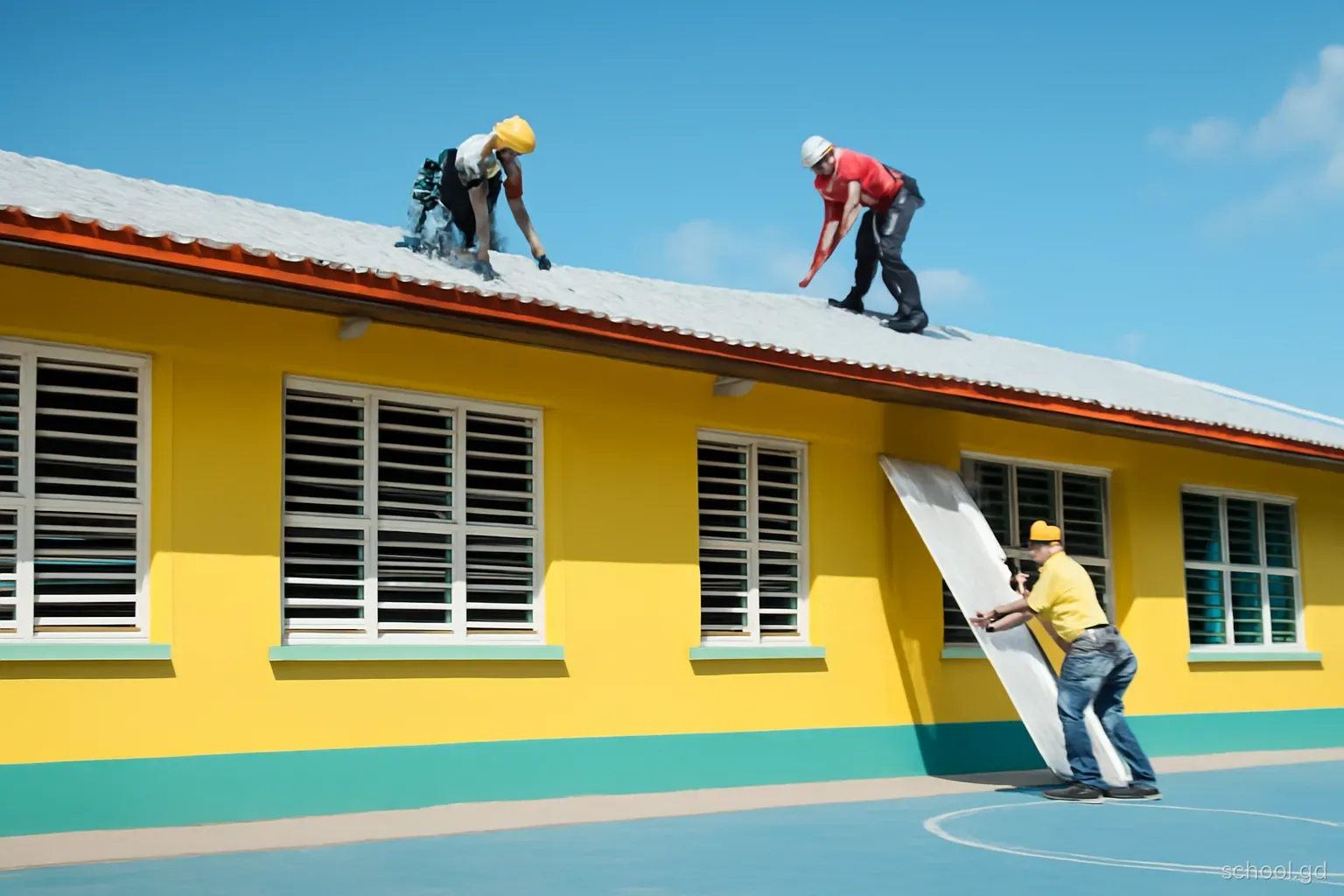
The Atlantic hurricane season runs from June to November, which means it overlaps the end of one school year, the whole summer break and most of the first term. Grenada lies near the southern edge of the main hurricane belt and for decades was thought of as relatively safe. Hurricane Ivan in September 2004 ended that belief, damaging the great majority of buildings on the island, schools included. Hurricane Beryl in July 2024 did the same on a smaller scale to Carriacou and Petite Martinique.
Most years pass with no more than a day or two of closures for storm watches and warnings. But families with school-age children benefit from knowing how decisions are made, how schools are used during emergencies, and what happens to learning when buildings are damaged. This guide covers the education side of hurricane season; it is a complement to, not a substitute for, official guidance from the National Disaster Management Agency.
How school closure decisions are made
When a tropical storm or hurricane threatens Grenada, the decision to close public schools is taken by the government, usually announced by the Ministry of Education in coordination with the National Disaster Management Agency, known as NaDMA, and informed by watches and warnings issued by the Grenada Meteorological Service. Private schools normally follow the government's lead, though they make their own announcements.
A tropical storm or hurricane watch means conditions are possible within the watch period; a warning means they are expected. Schools commonly close once a warning is issued for Grenada, or earlier if the timing of the storm makes travel to and from school unsafe. Closures can also be ordered for severe flooding, landslides or prolonged power and water outages, which are more frequent than direct hurricane strikes.
Reopening depends on damage assessments. After a near miss, schools may reopen within a day or two. After a direct hit, the Ministry needs to inspect buildings, clear debris, restore water and power and release schools that have been used as shelters, which can take weeks.
Schools as emergency shelters
Many school buildings in Grenada, Carriacou and Petite Martinique are designated as emergency hurricane shelters, because they are among the larger and sturdier public buildings in each community. Shelters are managed under the national disaster plan, with shelter managers and volunteers, and are opened when NaDMA announces it.
This double role has consequences for schooling. When a storm causes serious damage, families who have lost their homes may stay in school shelters for days or longer, which delays the return to classes. Schools may also lose furniture, books and equipment through use or damage. After Hurricane Ivan, the length of time some schools served as shelters was one of the reasons the school year was badly disrupted.
For parents, it is worth knowing whether your child's school is a designated shelter, because that affects both where your family might go in an emergency and how quickly the school is likely to reopen. The school or the district disaster committee can tell you.
Lessons from Ivan and Beryl
Buildings matter. Ivan exposed the weakness of many older school roofs and structures. Rebuilding after 2004 introduced stronger roofs and better construction in many schools, and building standards have since received more attention, though older buildings remain.
Learning loss is real. Long closures, shared premises and shift systems after a major storm cut teaching time. Students preparing for CPEA and CXC exams are particularly affected, and regional exam bodies have at times made allowances or adjusted arrangements after disasters.
Psychological effects last. Children who lived through a destructive storm may show anxiety when the next season comes around. Guidance counsellors, the Ministry's school psychology services and NGOs have provided support after past disasters, and parents can ask schools what is available.
Small islands are hit hardest. Beryl showed how a single storm can damage most of the schools on Carriacou and Petite Martinique at once, leaving few alternative buildings and forcing temporary arrangements while repairs went ahead.
Communication fails first. Power and phone networks often go down during and after a storm. Families who agree a plan in advance cope better than those relying on messages from the school.
A school-focused family hurricane plan
Most families in Grenada keep a general hurricane plan. Adding a few school-specific steps at the start of each season reduces confusion:
- At the start of the school year, confirm how the school will announce closures: class messaging groups, radio, the Ministry, or all three.
- Agree who collects each child if a storm approaches during the school day, and give the school updated contact details for at least two adults.
- Keep copies of birth certificates, report cards and medical records in a waterproof bag or stored digitally, since these are needed to re-enrol a child elsewhere if necessary.
- Put school bags, uniforms and books somewhere dry and high when a warning is issued, so the child can return quickly when classes resume.
- For older students, keep coursework for school-based assessments backed up, ideally in more than one place.
- Plan for home learning during closures: textbooks, reading books and simple routines help children keep up, especially when power is out and online options fail.
Catching up after a closure
A closure of a day or two needs no special response beyond reading and revision at home. Longer disruption is different. After a damaging storm, schools may reopen in stages, run morning and afternoon shifts so that two schools can share one undamaged building, or move classes into church halls and community centres. Timetables shrink, and teachers concentrate on core subjects and exam classes first.
Parents can help most by keeping routines steady: regular hours for schoolwork, reading every day, and practice in mathematics using whatever textbooks survive. Libraries, churches and community groups sometimes organise homework spaces or tutoring after a disaster, and organisations working in relief have supplied books and learning kits in past recoveries.
For students in CPEA and CXC years, the priority is to keep coursework and revision on track and to stay informed about any changes to deadlines. Speak to the subject teacher early if a school-based assessment was lost or delayed; there may be options, but they depend on acting quickly. Students who fall behind are not unusual after a major storm, and schools generally plan extra sessions once buildings and staff are back in place.
Mistakes to avoid
A few common errors make hurricane season harder for families with children in school:
- Waiting for official word before preparing. By the time a warning is issued, shops and petrol stations are crowded; prepare when a system is first forecast to approach.
- Sending children to school during a watch without checking announcements. Closures are sometimes announced late at night or early in the morning.
- Assuming the school building is safe because it is a shelter. Shelter status is about capacity and location; the official list and instructions from NaDMA govern where to go.
- Losing CXC coursework. School-based assessment projects stored only on one laptop or in a classroom cupboard have been lost to storms and floods before.
- Forgetting that summer storms affect results season. CPEA and CXC results and secondary placements arrive during peak season, so keep copies of anything important.
- Neglecting children's anxiety. Talking through the plan calmly before a storm, rather than during it, helps children feel safer and more in control.
Frequently asked questions
When is hurricane season in Grenada?
The Atlantic hurricane season officially runs from 1 June to 30 November, with the most active period usually from August to October. Grenada is near the southern edge of the main hurricane belt, so direct hits are less frequent than further north, but Ivan in 2004 and Beryl in 2024 show they do happen.
Who decides when schools close for a storm in Grenada?
The government decides for public schools, usually through the Ministry of Education in coordination with the National Disaster Management Agency, guided by Grenada Meteorological Service watches and warnings. Private schools generally follow the same decision and inform their own families directly.
Are Grenadian schools used as hurricane shelters?
Yes. Many schools are designated emergency shelters because they are large public buildings in each community. Shelters open when NaDMA announces it. Using schools this way can delay reopening after a major storm, especially if families stay for an extended period.
What happens to CXC exams if a hurricane hits?
The Caribbean Examinations Council has made special arrangements after past disasters in member states, such as adjusted deadlines or alternative arrangements for affected candidates. Any such measures are announced through the Ministry and schools, so students should follow official notices rather than rumours.
How long were schools closed after Hurricane Ivan?
Closures varied by school. Many buildings were badly damaged in September 2004, and some were used as shelters for weeks, so reopening was staggered and some schools ran shift systems or shared premises during repairs. Rebuilding continued for a considerable time after the storm.