For a parent new to Grenada, the first weeks of primary school bring a stream of small questions. What time should children arrive? What happens at assembly? Is lunch provided, and can a child bring food from home? How strict are uniform and hair rules? What does a child actually do between the morning bell and the afternoon pick-up?
The answers vary in detail from school to school, so the school's own rules always take priority, but the shape of the day is broadly similar across public primary schools from St George's to Sauteurs. This guide walks through a typical day, with practical tips drawn from how Grenadian schools commonly work.
Morning: arrival and assembly
The school day in most public primary schools begins around eight in the morning, with the gates open earlier for children who arrive with working parents or on early buses. Children who arrive late may need to report to the office, and persistent lateness is noted, so a predictable morning routine matters.
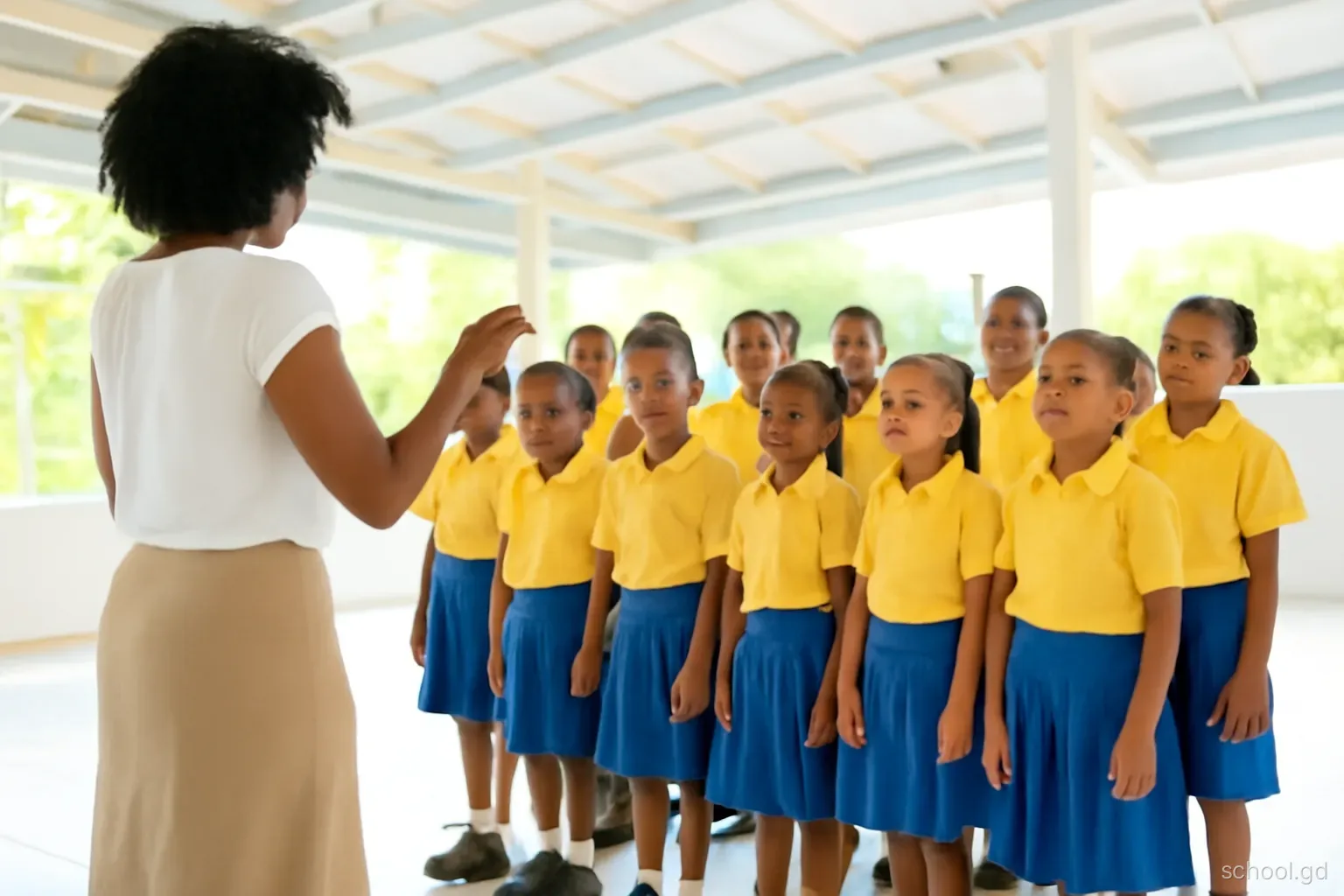
The day usually opens with an assembly or class devotion. Children line up by class in the yard or hall, sing a hymn or the national anthem, say a prayer and sometimes recite the National Pledge. The principal or a teacher shares announcements, birthdays, reminders about behaviour and news of upcoming events. On some days a class leads assembly with a short presentation, song or reading.
In many schools assembly is also when uniform and grooming are checked, so it is worth getting the details right from the first day.
Lessons through the day
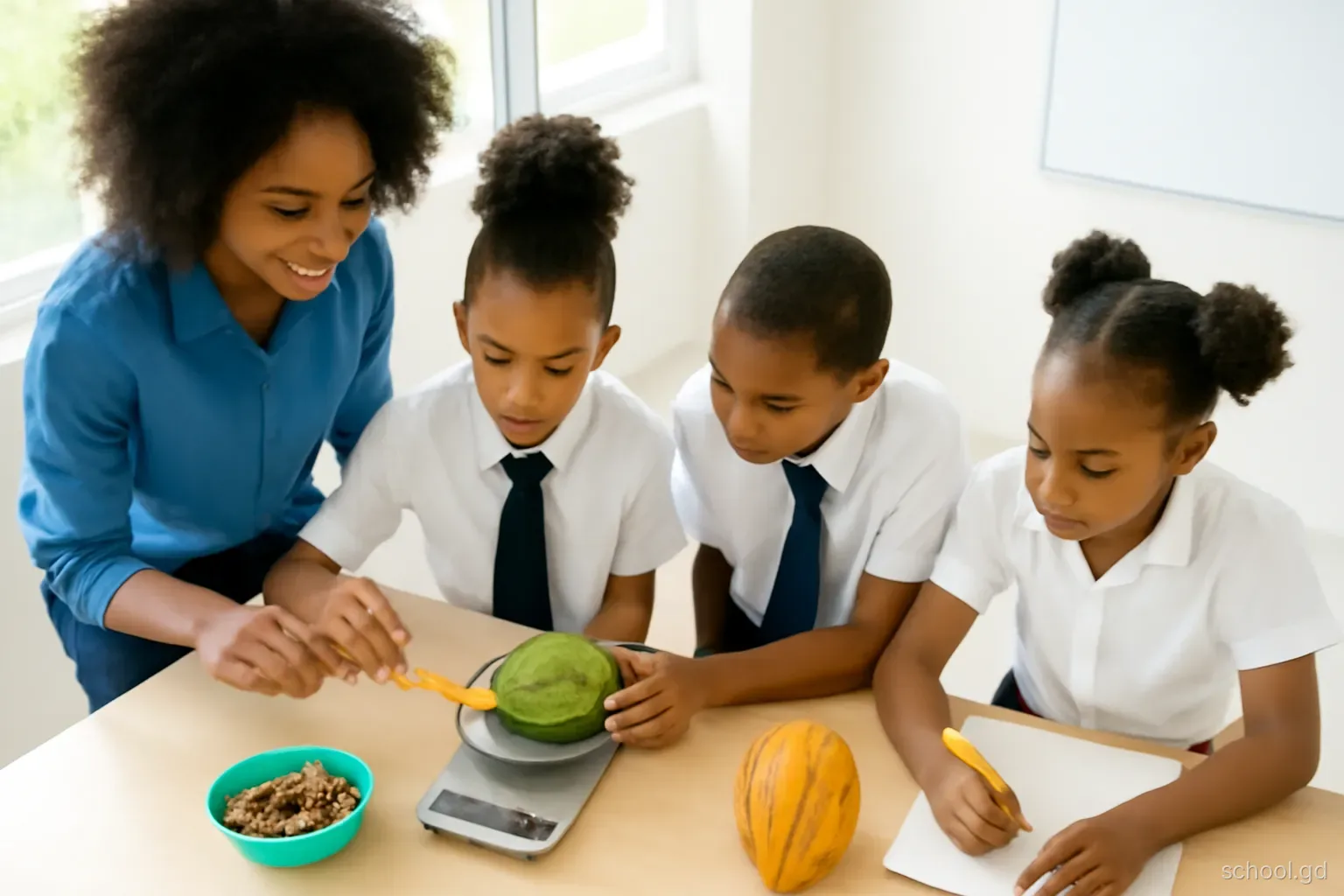
Classes then move into the timetable. In lower grades, one class teacher teaches most subjects, often with language arts and mathematics in the morning when children are freshest, and subjects such as science, social studies, health and family life education, art, music and physical education later in the day or week. Larger schools may have specialist teachers for physical education, music or information technology.
Teaching styles range from whole-class instruction and copying from the board to group work, songs, practical activities and projects, depending on the teacher, the class size and the resources available. Classrooms are usually open to the breeze with louvre windows and ceiling or wall fans, and noise from neighbouring classes is part of the experience in many buildings.
In the upper grades, especially Grade 5 and Grade 6, the timetable becomes more focused on the CPEA coursework and core subjects, and homework increases.
Break time and lunch
Morning break. A short break mid-morning gives children time to eat a snack and play. Many children bring a snack from home; some schools have a tuck shop or vendors selling snacks at the gate, which parents may want to keep an eye on.
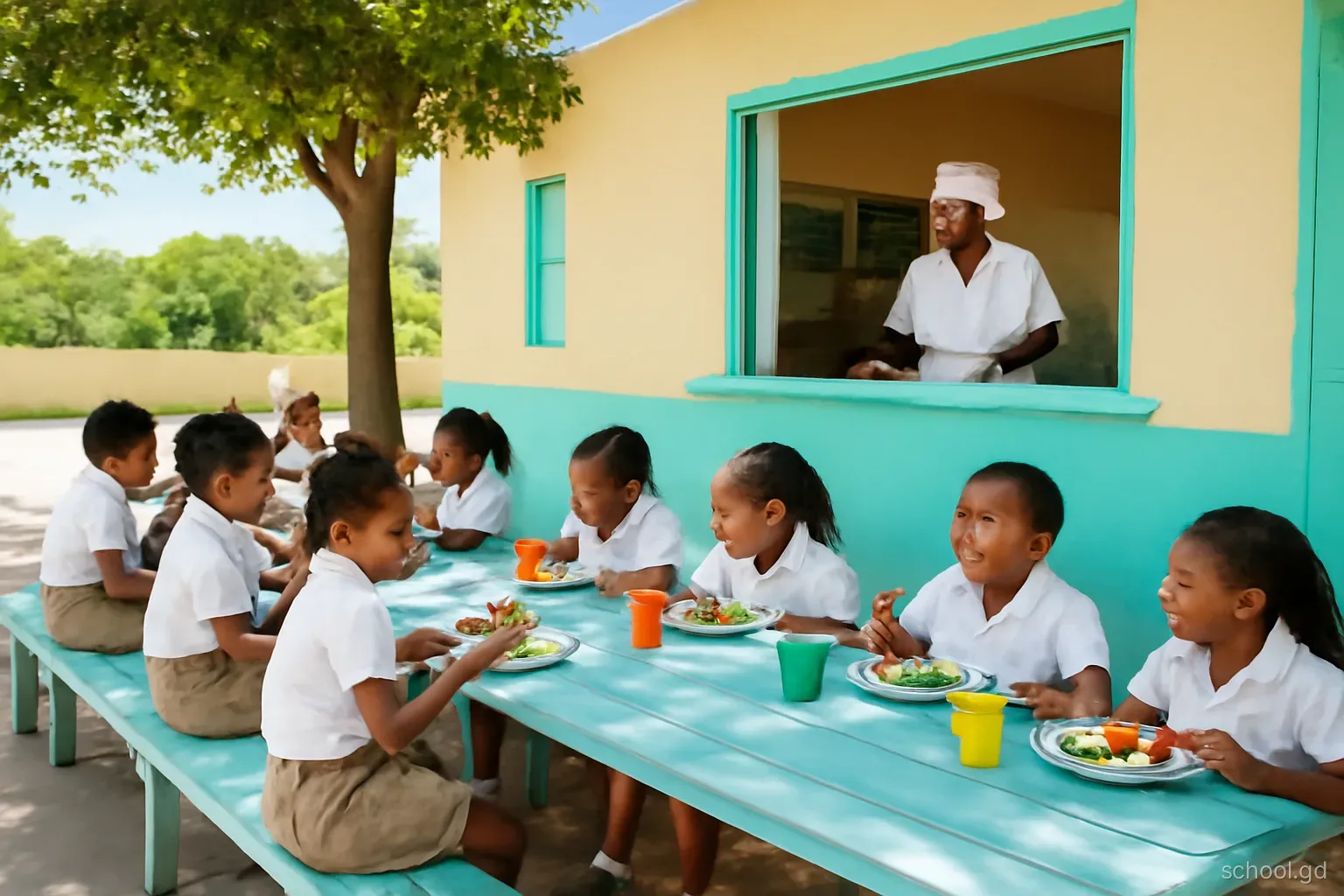
Lunch. Lunch usually falls around midday and lasts up to an hour. Children may eat a packed lunch from home, buy lunch where a school or vendor sells it, or receive a meal through the government's school feeding programme in schools that take part.
School feeding programme. The programme provides cooked lunches in many public primary schools, prepared in school kitchens and featuring local staples. Costs and eligibility can vary, and the programme's reach has changed over the years, so ask your school how it works and whether there is a charge.
Water. Children should bring a full water bottle every day. Grenada is hot year-round, and access to drinking water at school can be limited when supplies are interrupted.
Play. Lunchtime play ranges from football, cricket and skipping to clapping games. Supervision levels vary, so it is worth asking how the yard is supervised.
Uniforms, shoes and hair
Every public primary school has a uniform, and expectations are taken seriously. Details differ, but the following points are common:
- Colours and styles are specific to each school. Girls commonly wear a tunic or skirt with a blouse; boys wear trousers or shorts with a shirt. Some schools add a tie, a badge or a house-coloured item.
- Physical education kit is usually a separate T-shirt, shorts and sneakers, worn on PE days or sports days.
- Shoes are typically black or brown school shoes, sometimes with white socks. Sneakers may not be allowed outside PE.
- Hair rules can be strict in some schools, for example on length for boys, colourful accessories, beads or certain styles. Rules on locks and other natural hairstyles have been debated publicly; check the current school rules before your child's first day.
- Jewellery is usually limited to small stud earrings for girls, with watches sometimes permitted.
- Where to buy: uniform material and ready-made items are sold in stores in St George's, Grenville and other towns, and many families have uniforms sewn by a local seamstress using the school's specification.
Getting ready for the first week
Newcomers find the first week easier with a little preparation. A practical sequence for the days before term starts:
- Collect the school's uniform list, book list and rules, and read the sections on grooming, shoes and accessories carefully.
- Buy or have the uniform made early, since seamstresses and stores are busiest in late August, and allow time for alterations.
- Label every item: uniform pieces, bag, water bottle, lunch container, pencil case and sweater.
- Pack a daily kit: water bottle, snack, lunch or lunch money if the school allows it, a small towel or handkerchief, and any medication with written instructions for the teacher.
- Practise the journey at the real time of day, including where to wait for a bus or where to meet at pick-up.
- Give the school written contact details for at least two adults, details of allergies or medical conditions, and the names of anyone authorised to collect your child.
- Join the class messaging group if the teacher runs one, since many announcements about closures, events and reminders now arrive that way.
Afternoon, dismissal and after school
Afternoon lessons continue until dismissal, usually somewhere between two and three o'clock in public primary schools, with younger classes sometimes finishing a little earlier. At dismissal, children are collected by parents or authorised adults, walk home with siblings or friends, or travel by minibus, school bus or private transport.
Route buses are a normal way for older primary children to get home, especially in rural areas, and students often pay a reduced fare. Parents of younger children should be clear with the school about who may collect them, and give written notice of any change.
After-school options vary. Some schools run clubs, sports practice or homework supervision for part of the afternoon, especially for older classes, while others close soon after dismissal. Private after-school programmes, extra lessons and church-run activities fill some of the gap for working parents, and grandparents remain a central part of childcare for many Grenadian families.
Special days through the year
Sports day. Inter-house athletics, usually in the dry season, is one of the biggest days of the year, with parents cheering from the sidelines and children competing in house colours.
Independence celebrations. In the lead-up to 7 February, children wear national colours, learn about national heroes and symbols, and take part in parades, concerts and cultural shows.
Harvest, Christmas and Easter events. Church-linked schools in particular mark festivals with concerts, services and celebrations involving families.
Graduation. Grade 6 children, and in many schools kindergarten children, graduate at the end of the year in ceremonies that families treat as major occasions, often with formal outfits and photographs.
Fundraisers. Fairs, food sales and fun days organised by the PTA raise money for school improvements and offer a good way to meet other parents.
Frequently asked questions
What time does primary school start and finish in Grenada?
Most public primary schools start around eight in the morning and finish between two and three in the afternoon, with younger classes sometimes released a little earlier. Exact times vary by school, so check your school's schedule and its rules on late arrival and collection.
Do Grenadian primary schools provide lunch?
Many public primary schools take part in the government's school feeding programme, which provides cooked lunches prepared in school kitchens. Arrangements and any charges vary, and children can also bring packed lunches. Ask your school how lunch works and whether it caters for allergies or dietary needs.
Are school uniforms compulsory in Grenada?
Yes. All public primary schools and most private schools require uniforms, and schools enforce rules on colours, shoes, accessories and grooming. Uniforms are sold in town stores or made by local seamstresses to each school's specification, so get the official details before buying.
Can primary school children take the bus alone in Grenada?
Many older primary children travel by route bus, often at a student fare, especially in rural areas. Whether a child is ready depends on age, route and maturity. Younger children are usually collected by an adult, and schools should know who is authorised to pick them up.
Are there after-school programmes at Grenadian primary schools?
Some schools offer clubs, sports or homework supervision after dismissal, but provision varies and many schools close soon after the last bell. Working parents often combine school-based activities with private after-school care, extra lessons, church programmes or help from relatives.