Parents in Grenada often judge a preschool by what a child brings home: a page of neatly copied letters, a number chart, a song about the days of the week. Those things matter to families, and many centres know it. Yet the strongest early childhood programmes measure success differently, by how well children talk, play together, solve small problems, handle their feelings and look after themselves, because those are the abilities that make later reading and arithmetic possible.
This explainer walks through what a well-run preschool day typically involves for three- to five-year-olds, why each part is there, and what parents can look for when they drop off or collect a child. It is not a ranking of centres, and no single timetable is correct; good centres in St George's, Grenville, Gouyave and Hillsborough organise their days in different ways around the same principles.
Arrival and the shape of the morning
Most preschools open early to fit working parents, with children arriving over a stretch of time in the first part of the morning. A calm arrival routine helps: a greeting from a familiar adult, a place to put bags and lunch boxes, hand-washing, and something to do straight away, such as puzzles, books or drawing at a table. Children who arrive into an organised, welcoming room settle faster than those who arrive into noise and waiting.
Many Grenadian centres begin the formal day with a short assembly or circle time. Children sing, pray where the centre has a church connection, talk about the day, the weather or the date, and perhaps share news from home. Circle time works best when it is short and lively; three-year-olds cannot sit still and listen for long, and good teachers keep the group moving with songs, actions and questions that every child can answer.
The rest of the morning is usually divided into blocks of activity, outdoor play and a snack. A visible routine, the same order each day, gives young children security. They learn to predict what comes next, which reduces anxiety and tantrums and builds the self-control that primary school will ask of them.
Why play is the curriculum
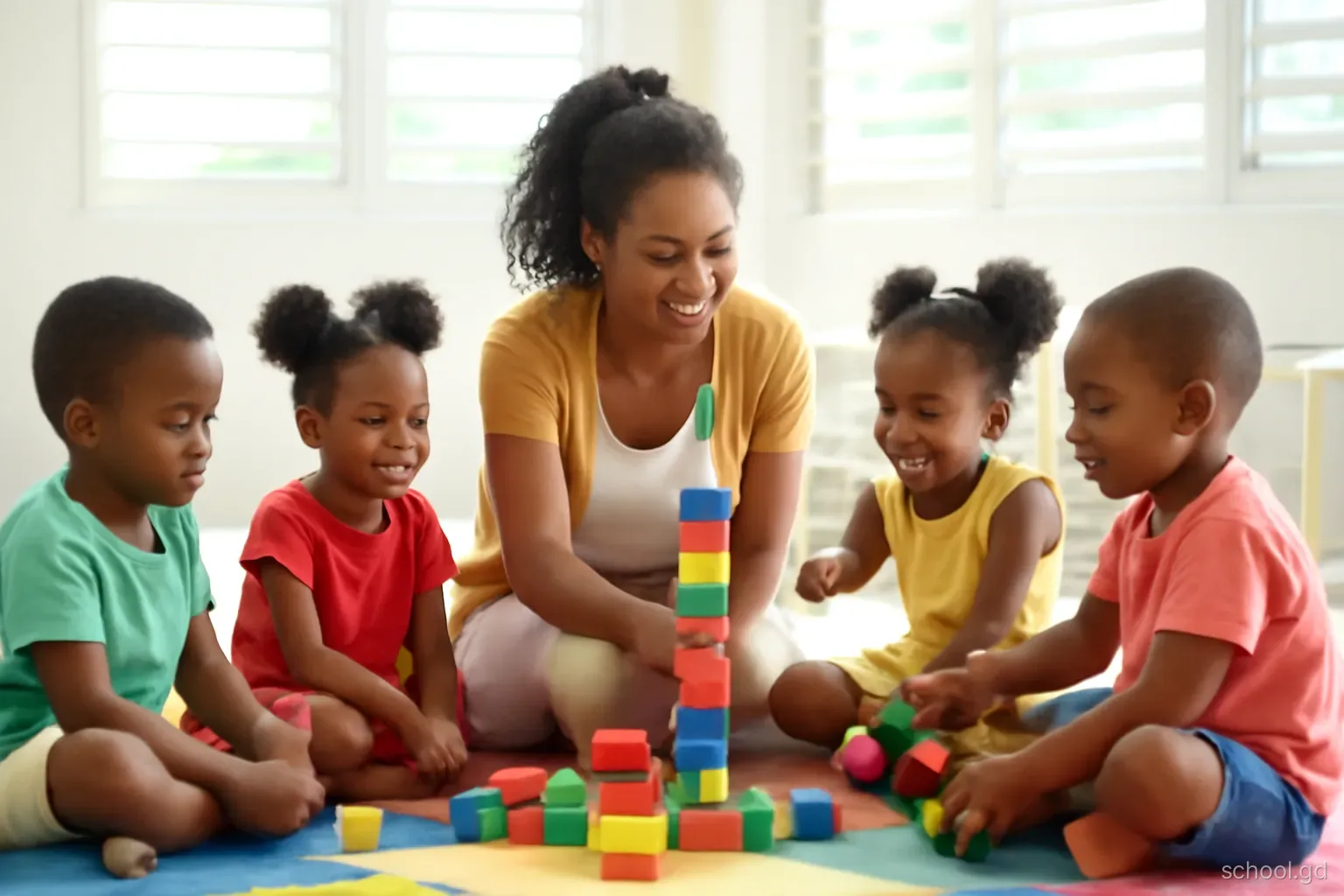
Play is not a break from learning at this age; it is how young children learn. When children build with blocks they experiment with balance, size and number. When they run a pretend shop selling bananas, nutmeg and fish, they practise language, counting, turn-taking and social rules. When they paint, mould dough or thread beads, they strengthen the small hand muscles they will later need to hold a pencil properly.
Regional early childhood guidance used across the Caribbean, and the approach promoted by Grenada's Ministry of Education, emphasises learning through play, active exploration and talk rather than long periods of copying and drilling. In practice that means rooms set out in activity areas, such as a book corner, a home or role-play corner, a construction area, sand and water, art materials and a quiet space, with children choosing among them for part of the day while adults move around, talking and extending what they do.
Some families worry that play-based centres produce children who cannot write their names. Good centres do teach early literacy and numeracy, through stories, rhymes, letter games, counting objects and drawing, but they do it in short, active bursts suited to the age, not in hours at a desk.
The other parts of a balanced day
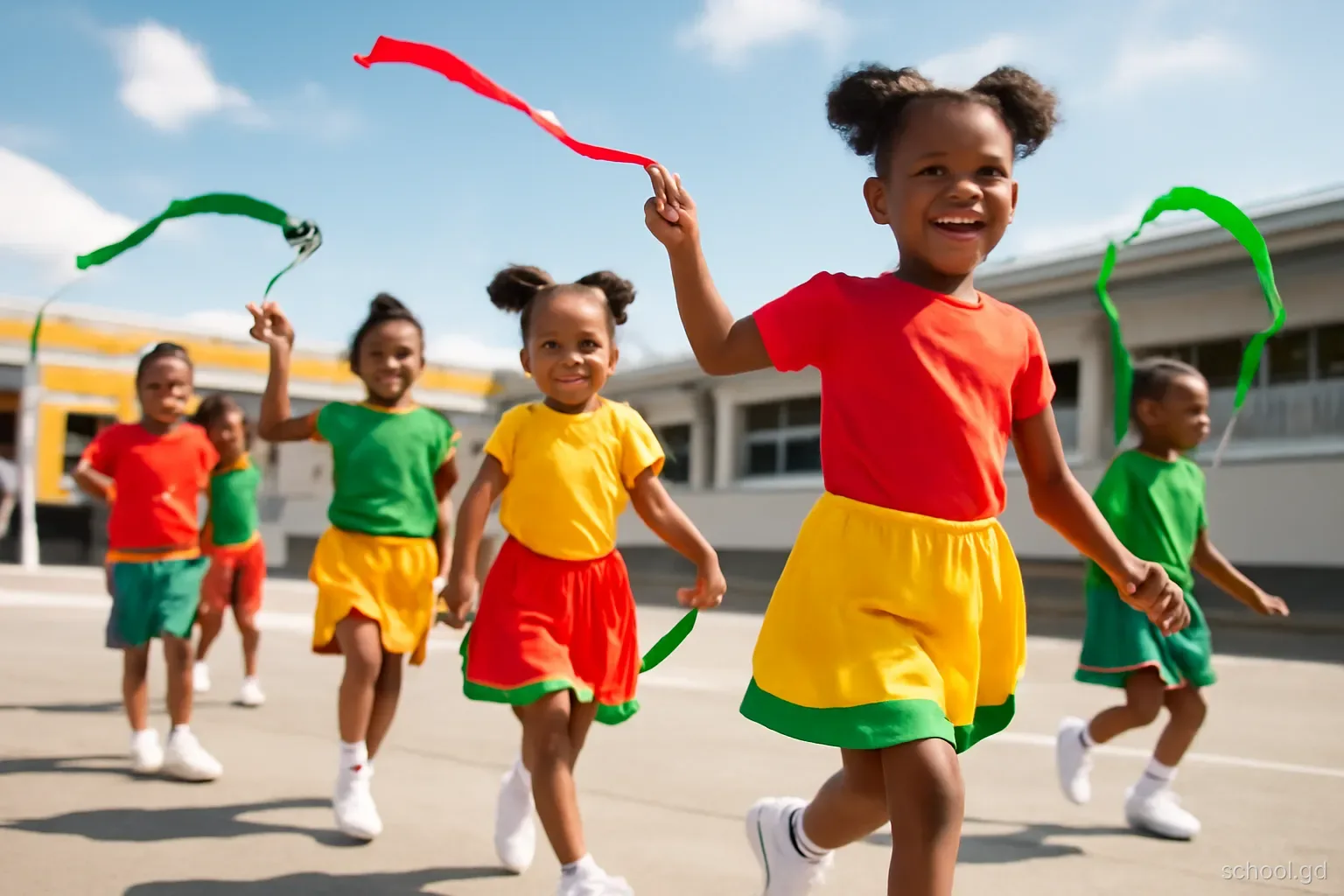
Outdoor time. Running, climbing, swinging and digging build strength and coordination and burn energy that otherwise turns into restlessness indoors. Look for shade from the midday sun, safe surfaces and equipment in good repair, and water available to drink. In heavy rain, a covered area or indoor movement games should replace it.
Snacks and lunch. Many centres ask parents to send food, while some provide meals. Mealtimes are learning time too: children practise serving themselves, using cutlery, waiting and conversation. Centres should follow sensible rules on allergies and on sugary drinks.
Rest. Most three-year-olds and some four-year-olds still need a rest after lunch. A good centre provides individual mats or cots, a quiet darkened space and an adult present, while allowing children who do not sleep to rest quietly with books.
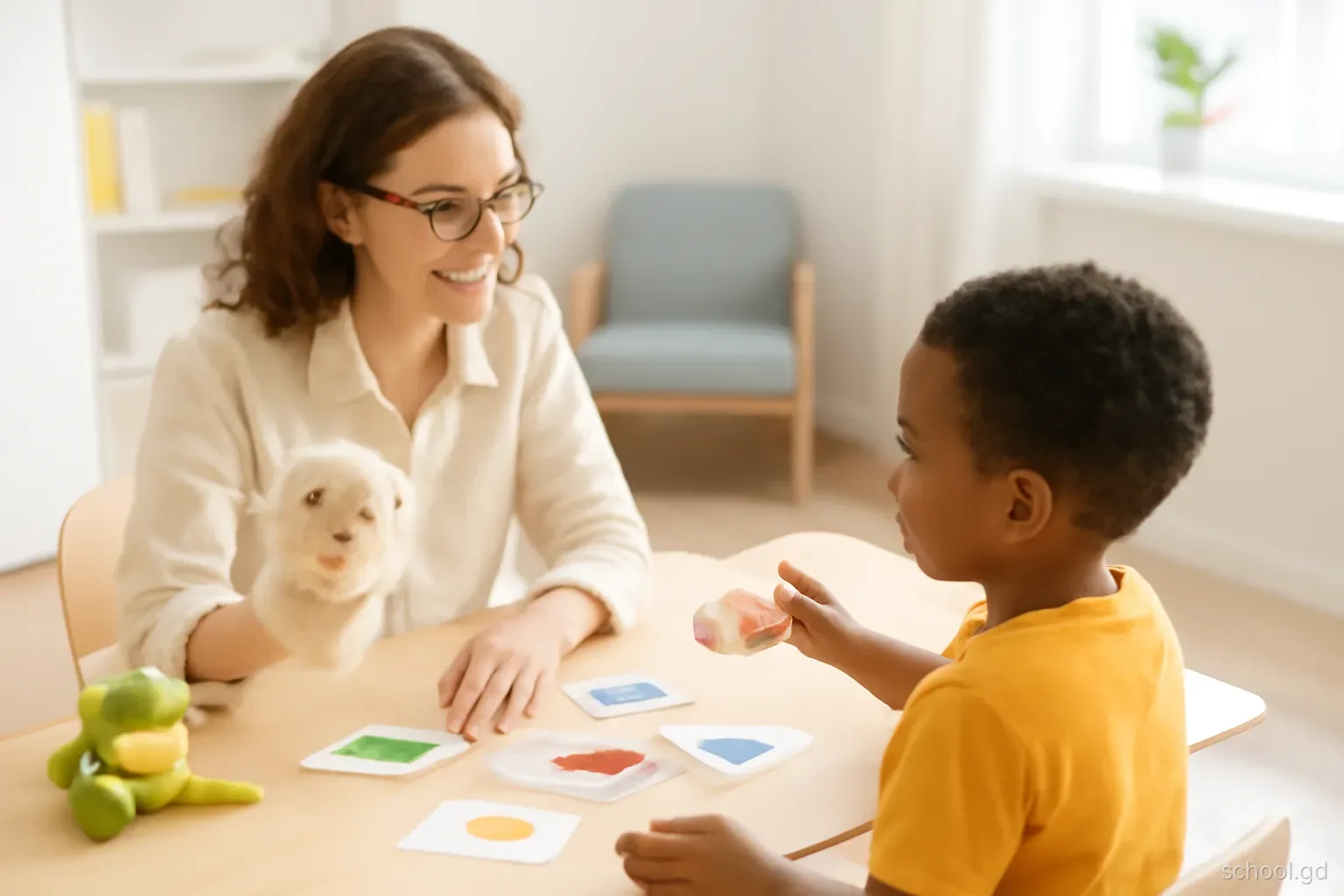
Small-group teaching. Short sessions with a few children at a time allow a teacher to focus on stories, sounds, numbers or a particular skill, and to notice which children need more help.
Self-care. Toileting, hand-washing, putting on shoes and packing a bag are part of the programme, not interruptions to it. Independence in these tasks makes Kindergarten much easier.
Language: Creole, English and lots of talk
Most Grenadian children grow up speaking Grenadian Creole English at home and in the community, and some hear older relatives use the French-based Patois that survives in parts of the island. Primary school is conducted in Standard English. Preschool is often where children begin to move comfortably between the two, and the way this is handled matters.
The best teachers welcome children's home language rather than correcting every sentence, while modelling Standard English through stories, songs and conversation. A child who is shamed for how they speak tends to speak less, and speaking less is the real enemy of literacy. A child who chats freely, asks questions and hears rich language around them builds the vocabulary that later makes reading comprehension possible.
Parents can ask how the centre approaches this. A thoughtful answer that values both home talk and school English is a good sign.
How the day changes between ages three and five
A good centre does not run the same day for a three-year-old and a five-year-old. Younger children need more time for free play, movement, snacks and rest, shorter group sessions and a great deal of help with toileting and self-care. Their attention for a story or activity may last only a few minutes, and the adults around them spend much of the day comforting, redirecting and talking.
By the final pre-primary year, children can usually manage longer group times, more structured activities and simple responsibilities such as tidying an area, handing out cups or leading a song. Teachers introduce more deliberate work on letter sounds, counting and early writing, still in short active bursts, and give children practice in the routines of Kindergarten: lining up, following instructions given to the whole group, packing and unpacking their own bags. If a centre groups children of different ages together, ask how the day is adapted for each, since a mixed group can work well when the adults plan for the range.
What to watch for at drop-off and pick-up
Parents rarely see the middle of the day, but the edges reveal a lot. Over a few weeks, notice:
- Whether staff greet children by name and get down to their level to talk.
- Whether the room looks used, with children's own drawings and paintings displayed rather than identical worksheets.
- How staff speak to a crying or upset child: calm and patient, or sharp and dismissive.
- Whether children have free access to water, books and toys, or wait for long periods with nothing to do.
- How cleanliness and hygiene are managed in toilets, nappy-changing areas and food preparation.
- Whether there are enough adults for the number of children, especially on outings and at mealtimes.
- Whether your child talks about friends, games and stories, not only about what they copied.
Warning signs and what to do about them
Some practices should prompt a conversation with the centre: young children made to sit for long stretches copying letters; harsh punishment, shouting or physical discipline; children left unsupervised outdoors; television or devices used to fill large parts of the day; and a reluctance to let parents see the rooms. Corporal punishment in schools has been a subject of public debate in Grenada, and many parents and educators are firm that it has no place in early childhood settings.
Raise concerns calmly with the teacher first, then the supervisor or owner. Early childhood centres in Grenada are expected to be registered with the Ministry of Education and to meet national standards, and the Ministry's early childhood officers monitor centres. If a serious issue is not resolved, or a child's safety is at risk, contact the Ministry. In an emergency, call 911.
Frequently asked questions
Should a three-year-old be writing letters at preschool?
Most three-year-olds are not ready for formal handwriting. They build readiness through drawing, painting, playdough and threading, which strengthen hand muscles. Recognising some letters and their sounds through games is reasonable, but long copying exercises are not appropriate at this age.
How long should circle time last for young children?
Short sessions work best, often around ten to fifteen minutes for three- and four-year-olds, kept lively with songs, actions and questions. Longer sessions usually lead to restlessness, and a good teacher adjusts the length to the group on the day.
Is play-based learning enough to prepare a child for primary school?
Well-planned play builds language, early maths, social skills and independence, which primary teachers value most. Good play-based centres also include short, active literacy and numeracy activities, so children arrive at Kindergarten ready to learn rather than already tired of desk work.
Should preschools in Grenada teach in Standard English?
Teachers generally model Standard English through stories and conversation while respecting the Grenadian Creole English children speak at home. Encouraging children to talk freely matters more than correcting every sentence, because confident talkers become stronger readers.
Do children in Grenadian preschools need to nap?
Many three-year-olds and some four-year-olds still need rest after lunch. A good centre provides a quiet space, individual mats or cots and supervision, and allows children who do not sleep to rest quietly with books.