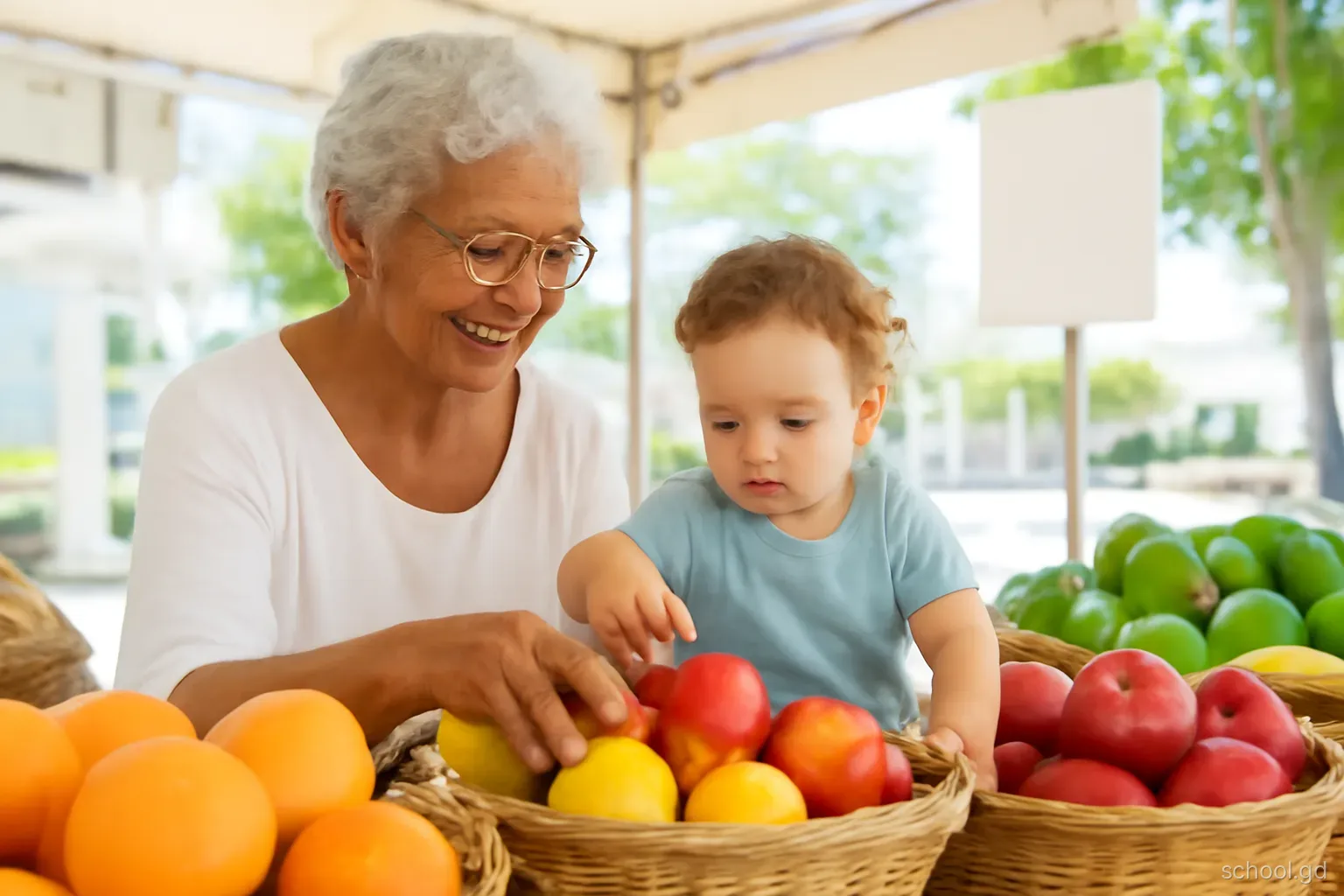
Children in Grenada spend far more of their early years at home, with parents, grandparents, aunts and older cousins, than in any preschool. That time is where most early learning happens, and it needs no special equipment. A trip to the market in St George's or Grenville, an afternoon in the yard, cooking oil down on a Sunday or watching fishing boats come in at Gouyave all offer the raw material for language, counting, science and stories.
This guide gathers practical ideas for children aged roughly two to five, built around ordinary Grenadian life rather than imported workbooks. None requires a smartphone, a printer or spending money. The aim is not to turn home into school, but to use everyday moments in ways that build the talk, curiosity and confidence that make preschool and Kindergarten easier.
Talk is the most powerful tool
Research on early childhood consistently points to one factor above others: the amount of back-and-forth conversation a young child has with adults. Not words heard from a television, but real exchanges where the child speaks, the adult responds and builds on it. A child who has these conversations every day arrives at school with a larger vocabulary, and vocabulary is closely linked to later reading comprehension.
In practice this means narrating daily life ("now we're washing the dasheen, it's muddy from the garden"), asking open questions ("what do you think the goat is eating?"), waiting for an answer and extending it ("yes, grass, and look, it's eating the leaves from the bush too"). It means letting the child tell stories, however rambling, and treating their questions as worth answering.
Language at home will often be Grenadian Creole English, and that is fine. Rich talk in the home language builds thinking and vocabulary that transfer to Standard English at school. Mixing in songs, rhymes and stories in Standard English broadens the range, and grandparents who know old folk stories, Anansi tales or songs from Patois-speaking communities pass on something no school can replace.
Kitchen and yard: maths and science without worksheets
Counting and sorting. Count plantains into a bag, sort beans from rice, match socks from the washing, line up mangoes from smallest to biggest. Sorting by colour, size and type is the foundation of mathematical thinking.
Measuring. Let children fill cups with water or rice, compare which container holds more, pour carefully, and help measure flour for bakes. Words like more, less, full, empty, heavy and light come naturally.
Watching things change. Cooking shows ice melting, dough rising, eggs setting and cocoa dissolving. Ask what the child thinks will happen before it does, then talk about what actually happened.
Growing things. Plant a few seeds, such as pumpkin, corn, callaloo or peas, in a pot or a corner of the yard. Watering and measuring the plant each week teaches patience, responsibility and the language of growth.
Creatures in the yard. Lizards, snails, ants, hummingbirds and the crapaud after rain are fascinating to small children. Watch, describe and draw them; talk about where they live and what they eat, while teaching gentleness and not touching anything that stings.
Out and about: the market, the beach and the bus
A market visit is a lesson in colour, shape, number and conversation. Name the fruits and vegetables, count them into the bag, notice which are smooth or rough, heavy or light, sweet or sour, and let the child hand over money and receive change with your help. Talk to vendors where it is welcome; children learn social confidence from watching adults greet and bargain politely.
The beach offers a huge outdoor classroom: sand for digging, shaping and pouring, shells to sort and count, waves to watch, crabs to find, and questions about why the water is calm at Grand Anse but rough on the Atlantic side. Keep close supervision at the water's edge at all times, and use shade and water to manage the sun.
Even a route bus journey can be learning: counting stops, spotting colours of houses, naming villages, noticing the change from town to countryside. Talk about where you are going and why, and what you will do there. The goal is not constant questioning, which children find tiring, but steady, relaxed conversation.
Reading aloud: a simple daily habit
Reading to a child every day is among the most valuable things a family can do, even with few books. A routine that works for many households:
- Choose a fixed time, such as after the evening bath or before bed, so reading becomes part of the day rather than something easily skipped.
- Start with short books with clear pictures for toddlers, and longer stories as the child grows. Caribbean picture books, with familiar settings and characters, help children see their own world in print.
- Let the child turn pages, point to pictures and ask questions. Stopping to talk is the point, not an interruption.
- Read favourites again and again. Repetition builds vocabulary and confidence, and children love predicting what comes next.
- Run a finger under the words occasionally so the child notices that print is read from left to right.
- Use the public library and swap books with friends and church groups to refresh the supply without cost.
- When books run out, tell stories: family stories, made-up adventures, or stories about the child's own day.
Screens: a realistic approach
Phones and tablets are part of life in most Grenadian homes, and many young children watch videos while adults work or travel. International guidance generally recommends very little screen time for children under two, apart from video calls with relatives, and limited, good-quality content for older preschoolers, ideally watched with an adult who talks about it. The concern is less the screen itself than what it displaces: talk, play, sleep and outdoor activity.
A practical approach is to set predictable limits, keep screens out of bedtime and mealtimes, choose slower educational programmes over quick-cut clips, and watch together when possible. Video calls with grandparents in New York, Toronto or London are a different matter; they are real conversation and worth encouraging. Most of all, offer appealing alternatives: a box of blocks, crayons and paper, a bucket of water and cups in the yard.
Grandparents, older siblings and other carers
In many Grenadian households, the person spending the most time with a young child is not a parent but a grandmother, an aunt, an older sibling or a neighbour who helps out. These carers are central to early learning, and they bring strengths of their own: stories from the past, knowledge of plants and animals, songs and games from their own childhood, and time to sit and talk that busy parents may lack.
Share ideas rather than instructions. A grandparent who is told that talking, telling stories, cooking together and taking walks are valuable learning is often delighted to do more of what comes naturally. Older siblings can read to younger ones, play counting games or teach clapping rhymes, which benefits both children. Where carers rely heavily on television to keep a toddler occupied, offering a box of simple toys, crayons, paper and a few books can shift the pattern gently without criticism.
What to avoid
Well-meaning efforts at home can sometimes backfire, usually because adults are anxious for a child to get ahead. Relaxed, enjoyable learning tends to stick far better than pressure. Common pitfalls include:
- Turning every moment into a quiz, which makes children anxious and quieter.
- Pushing formal writing too early, before hand muscles are ready, leading to frustration and poor pencil grip.
- Comparing a child with siblings or cousins; children develop at different rates within a wide normal range.
- Correcting home language harshly, which discourages talk.
- Buying expensive educational toys while overlooking pots, cups, boxes and outdoor play, which work as well or better.
- Ignoring persistent concerns about speech, hearing or development; mention them to a nurse or doctor rather than waiting.
Frequently asked questions
How can parents teach toddlers without buying materials?
Use everyday activities: talking while cooking, counting fruit, sorting laundry, watching insects in the yard, visiting the market and reading library books. Conversation and play with familiar objects build language and early maths as well as any purchased kit.
Is it a problem if a child speaks Creole at home?
No. Rich conversation in Grenadian Creole English builds vocabulary and thinking skills that transfer to Standard English at school. Adding stories, songs and rhymes in Standard English broadens the child's range without discouraging home talk.
How much screen time is acceptable for a preschooler?
International guidance suggests very little for under-twos, apart from video calls, and limited, good-quality content for older preschoolers, ideally watched with an adult. Keep screens away from meals and bedtime and offer active play alternatives.
When should a child start learning letters?
Many children show interest in letters, especially those in their own name, between three and five. Follow their interest with games, songs and pointing out letters in daily life, rather than formal drills. Formal teaching begins in Kindergarten.
Where can families in Grenada find children's books?
Public library services, church and community book swaps, friends and relatives abroad who send books, and local bookshops are common sources. Caribbean picture books with familiar settings are especially valuable for young readers.